Business credit card rewards: How do miles work?
When you’re choosing a business credit card, one of the first questions you’ll need to answer is whether to earn miles or cash back. Cash back feels simple and familiar. Miles can seem less clear—how much are they worth, and are they really a better deal?
Miles are simply a rewards currency tied to travel, and for small-business owners (SBOs) who travel often—or want to invest more in client visits, conferences or team off-sites—miles can unlock outsized value compared with a flat cash back rate, especially when paired with premium travel benefits.
Keep reading to learn more about how miles work, how they compare to cash back and when a travel rewards card might make more sense for your business.
What you’ll learn:
-
Business credit card miles are a type of rewards currency that can offer strong value when you redeem them for travel that aligns with your business needs.
-
Understanding how miles compare with straightforward cash back can help you choose the rewards that best fit your budget, travel habits and business goals.
-
Travel rewards business credit cards—like those from Capital One—can also provide additional value through benefits like flexible redemption options and tools to help you manage business travel and expenses.
What exactly are credit card miles?
Credit card miles are a type of reward, much like points or cash back. What sets them apart is how you redeem them and where they typically deliver the most value—travel.
With a business credit card that earns miles, you generally earn them in a few key ways.
-
Miles on everyday business spending: You earn miles on purchases like travel, advertising, software, supplies or dining.
-
Bonus miles in specific categories: Some cards offer elevated rewards on travel or other high-impact business expenses.
-
A central rewards balance: Instead of tracking individual airline miles, your miles accumulate in your card’s rewards program.
Those miles can then be redeemed for travel expenses, such as:
-
Flights
-
Hotels
-
Rental cars
-
Other eligible travel expenses
Depending on the card, you may also be able to redeem your miles through a travel portal or transfer them to airline and hotel partners, which can sometimes increase the value you get per mile.
For SBOs, it can help to think of miles as a flexible travel budget you build with your business spending. As your company covers day-to-day expenses, you’re steadily earning a currency that can reduce the cost of future trips, support employee travel or make key client meetings more affordable.
In short, miles are simply a travel-focused way to reward the spending you’re already doing for your business.
Are miles a better value than cash back?
Yes, for SBOs who prioritize travel and experiences, miles can offer more overall value than cash back. Cash back is straightforward: You can earn a set percentage on your spending and usually redeem it as a statement credit, deposit or check. There’s no guessing about value, which is why many SBOs gravitate toward it.
Miles, on the other hand, can take a little more work to understand, but in the right situations they can stretch your budget further than a flat cash back rate—especially if your business spends meaningfully on travel.
Here are a few ways miles can come out ahead.
-
Higher potential value per dollar spent: With some travel rewards programs, the value of your miles can exceed the standard cash back rate when you redeem for flights, hotels or other travel expenses. For example, if the miles you earn on your spending can be redeemed for travel at a rate that’s effectively higher than your typical cash back percentage, you’re getting more value from the same purchases.
-
Travel booking tool and portal access: When you book through a travel portal, you may unlock additional value, like redeeming miles at a favorable rate or stacking rewards with other benefits.
-
Elevated sign-up bonuses and ongoing offers: Travel rewards cards often feature substantial welcome bonuses when you meet a minimum spend threshold in the first few months. For a small business with regular expenses, that can translate into a large pool of miles early on—potentially worth more than a comparable cash back bonus if redeemed for high-value travel.
-
Benefits that go beyond the numbers: With miles-based travel cards, you may get added benefits—such as airport lounge access, credits toward TSA PreCheck® or Global Entry, or travel protections—that don’t show up as a simple percentage but still create meaningful value for frequent travelers.
That said, miles aren’t automatically better for every business. If you don’t travel often or you prefer maximum flexibility to use rewards for anything, a cash back card might be a better choice. But if travel is a core part of how you run and grow your business, the combination of higher travel redemption value and built-in benefits can make miles more valuable than straightforward cash back over time.
How travel rewards can benefit business owners
Travel rewards can do more than just discount a flight—they can support your daily operations and your long-term business goals. For SBOs, that value can show up in a few meaningful ways.
-
Optimizes your travel and business expense budget: By covering some travel expenses with miles instead of cash, you can keep your travel line item in check and redirect more of your budget toward areas like hiring, marketing or equipment—without cutting back on essential travel.
-
Enhances key relationship-building moments: Instead of choosing between go or don’t go, you can use miles to upgrade key interactions—like visiting a top client in person, attending a crucial pitch or hosting a strategic partner meeting—when face-to-face time matters most.
-
Supports your team’s growth and mobility: Travel rewards can help send employees to conferences, trainings or cross-office visits that build skills and strengthen collaboration—even when budgets are tight.
-
Improves the experience for frequent travelers: Benefits that often come with travel rewards cards—such as lounge access or expedited security programs—can help your most frequent travelers stay productive on the road and arrive better prepared for important meetings.
-
Keeps you agile when opportunities come up: A healthy miles balance can give you more flexibility to respond to last-minute opportunities or challenges—like a time-sensitive client visit or vendor meeting—without scrambling for extra funds.
Travel business credit cards from Capital One
Capital One offers a suite of business travel rewards credit cards that help SBOs turn everyday expenses into travel rewards. While specific details vary by card, here are some of the key benefits you’ll typically get from a Capital One business card.
-
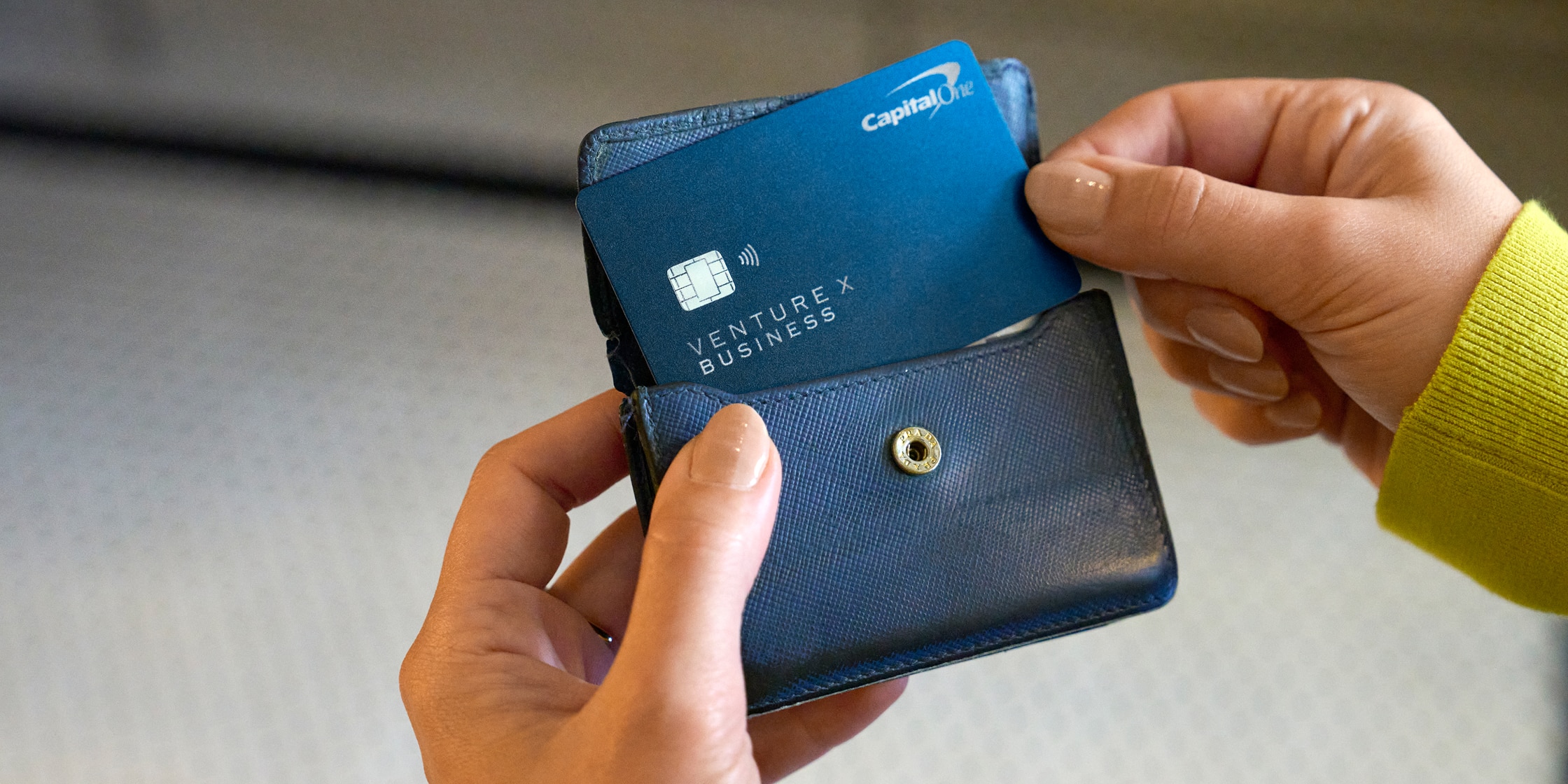
Simple, high-earning rewards: Many Capital One business travel cards let you earn unlimited miles on every purchase—so you don’t have to track rotating categories. And some cards, like the Venture X Business card, offer elevated earn rates (such as higher miles on flights, hotels and rental cars) on travel booked through Capital One Business Travel.
-
Integrated travel booking experience: With eligible cards, you can use Capital One Business Travel to book flights, hotels and rental cars in one place—often with built-in tools like price tracking and recommendations. This can make it easier to redeem miles and manage business travel for you and your team.
-
Premium travel extras for frequent travelers: Depending on the card, you may have access to premium benefits such as Capital One Lounges, an annual travel credit and statement credits for programs like Global Entry or TSA PreCheck®—helping frequent travelers move faster and travel more comfortably.
-
Flexible redemption and partner options: Capital One miles can typically be used to cover travel purchases or redeemed through Capital One Business Travel. With eligible cards, you can also transfer miles to a range of airline and hotel partners, which can unlock additional value for more strategic redemptions.
-
Business-friendly features and controls: Capital One business cards are designed with teams in mind, often including the ability to issue employee cards at no additional cost, set spending limits and connect transactions to your accounting or expense management tools.
Together, these features can help you get more out of every dollar your business spends—whether that’s turning routine expenses into future trips, making travel smoother for frequent flyers or giving you better control over team spending.
Key takeaways
Miles aren’t automatically better or worse than cash back—they’re simply a different kind of reward that can be especially useful when travel plays a meaningful role in how you run your business.
For SBOs who are regularly on the road, miles can help lower trip costs, enhance the travel experience, and create more opportunities for in-person connections with customers and teams.
Ready to take the next step? You can start by comparing Capital One travel rewards business cards to find the mix of rewards, benefits and controls that best support your company’s travel and day-to-day operations. The best part? See what you’re pre-approved for—before applying—with no impact to your credit score.