How to apply for and get a business credit card
If you’re wondering how to apply for and get a business credit card, you can start by checking eligibility requirements and researching different card options. From there, you can apply for a business credit card by providing the necessary personal information and financial details about your business.
As your business grows, you’ll likely see an increasing need to keep personal and business expenses separate. A business credit card can help with that—and more. Here’s what you need to know about applying for and getting a business credit card.
What you’ll learn:
-
Businesses of all sizes can use business credit cards to help manage expenses and support growth.
-
To qualify for a business credit card, you’ll usually need an excellent or good credit score, along with some form of income. There may also be additional requirements set by the card issuer.
-
The application process for a business credit card typically involves reviewing card options and gathering the information needed to complete your application.
-
You may consider seeking pre-approval for a business credit card to better determine which offers you’re eligible for before applying.
Who can get a business credit card?
Companies of all sizes, along with many freelancers and self-employed individuals, can get a business credit card. Card-eligible companies include:
-
Sole proprietorships
-
Limited liability companies (LLCs)
-
Small businesses
-
Large corporations
Why should you open a business credit card?
Business credit cards can help you better manage your business finances by separating your personal and business. They can also deliver other important benefits, including:
-
Helping you build business credit history
-
Supporting smoother cash flow
-
Making recordkeeping easier
-
Delivering attractive rewards and incentives
How to qualify for a business credit card
To qualify for a business credit card and increase your approval odds, there are typically a few key factors—involving income or ability to repay, credit history and basic business details—that help determine your eligibility. First, you’ll generally need some form of income (or a plan to generate business revenue) through an established operation or a freelance gig.
Most issuers of small-business credit cards will check your personal credit score. They may also review your business credit score, if available. Each business credit card will typically indicate a recommended credit score range for qualification. But in general, the higher your scores, the more likely it is you’ll be approved and offered good terms.
Depending on the business credit card, certain eligibility requirements—like a personal guarantee or personal credit score thresholds—may also impact approval.
How to get a business credit card in 5 steps
Once you’ve determined that you have a good chance of qualifying, applying for a business credit card is a relatively straightforward process. In fact, much of the process is similar to applying for a personal credit card. Let’s take a closer look at the different steps involved in applying for a business credit card.
Step 1: Research business credit cards
There is a wide range of business credit cards that suit a variety of business needs. It’s just a matter of matching card offerings with your needs. For example, if you travel often and are interested in earning rewards for travel purchases, you may want a business card—like the Capital One Venture X Business card—that offers travel points and miles incentives. A card with no preset spending limit (NPSL) may be beneficial if you plan on using it for larger purchases.
Consider your current spending patterns to decide which rewards programs—like travel miles or cash back—would benefit your business the most. Additionally, review fees and interest rates, and look for welcome bonuses or sign-up offers. And take time to understand the card’s specific terms and conditions.
Step 2: Consider seeking pre-approval
Certain business card issuers allow you to get pre-approved for a business card to determine which offers you may be eligible for. For example, with Capital One, you can provide basic information about your business and answer some preliminary questions. In many cases, you can expect to receive card offers tailored to your business within seconds.
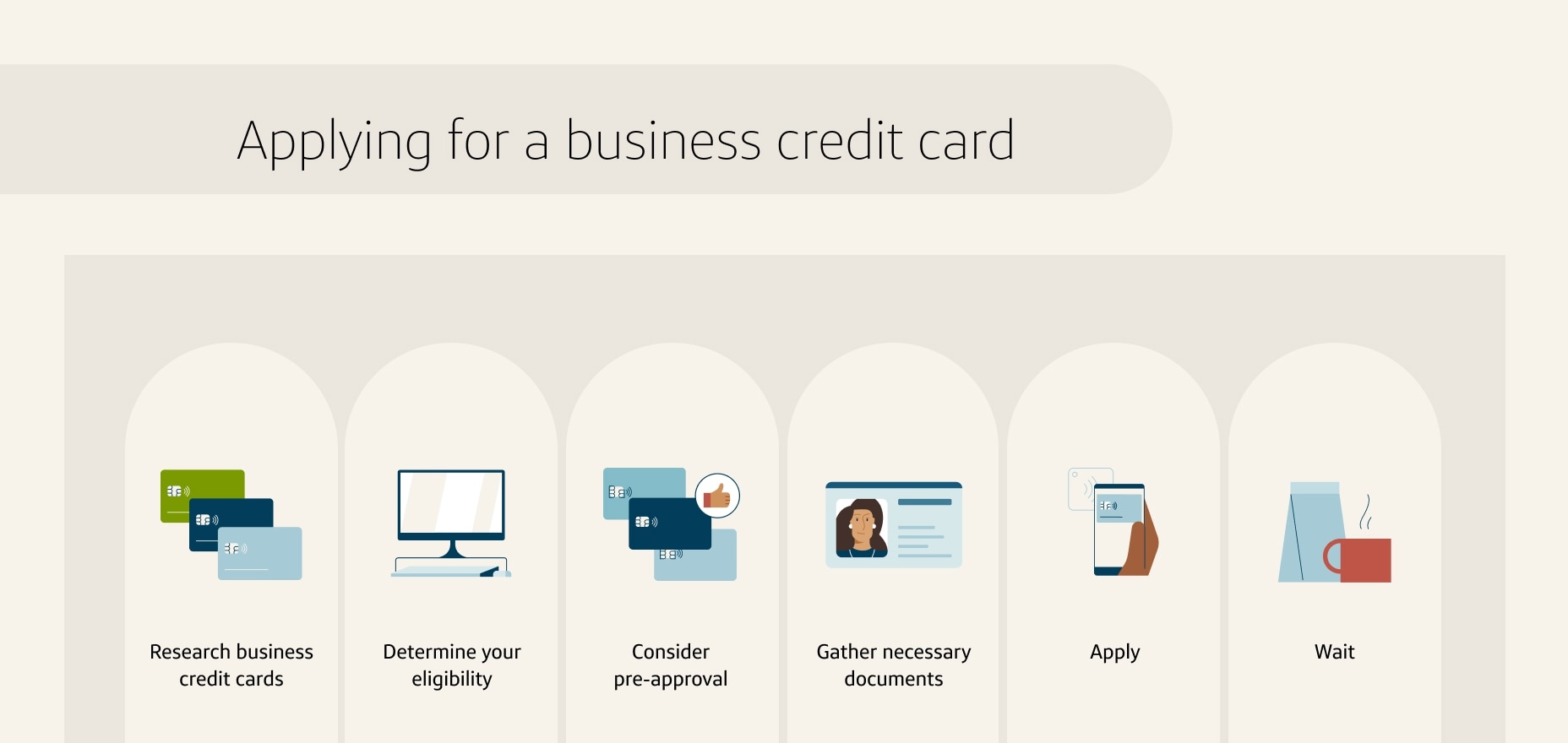
Step 3: Gather what you need to apply for a business credit card
To save time, gather everything you need for your business card application. Typically, this may include some or all of the following:
-
Contact information (business mailing address and phone number)
-
Legal name of your business
-
Your Social Security number (SSN) and legal name (if you’re a sole proprietor)
-
How long your business has been in operation
-
Your role in the business
-
Federal tax ID number (TIN)
-
Industry type (the North American Industry Classification System [NAICS] code)
-
Legal structure (corporation, partnership, nonprofit, LLC or cooperative)
-
Annual revenue
-
Total monthly expenses
-
List of beneficial owners or business controllers (for corporations and partnerships)
Step 4: Submit your application for the business credit card
When you’re ready to apply, you can fill out an online application for a business credit card. It usually takes less than 10 minutes to complete. You may be asked to verify certain information or provide additional details as your application is reviewed.
Step 5: Wait for the approval decision
Once you submit your application, the card issuer will review it. You may be approved within a few minutes or a few days. If approved, you’ll typically receive your business credit card by mail in about seven to 14 business days.
FAQ about how to get a business credit card
Here are answers to common questions about applying for a business credit card.
When is the right time to apply for a business credit card?
The right time to apply for a business credit card will vary depending on the unique aspects of your company, including where you are in your seasonal business cycle. That’s why it’s important to consider your business needs, goals, requirements and credit preferences as a business owner.
Learn more about when you may need a business credit card.
Does applying for a business credit card affect personal credit?
Applying for a business credit card can affect your personal credit scores if the credit card issuer conducts a personal credit inquiry as part of the application review process. Each hard credit inquiry may temporarily lower your credit scores and show up on your personal credit reports.
Can I apply for a business credit card with an EIN?
In some cases, you may be able to apply for a business credit card using an employer identification number (EIN) rather than your SSN. To do so, rather than apply for a small-business credit card, you typically must apply for a corporate credit card since most small-business credit cards still require a personal guarantee. Keep in mind, however, that corporate credit cards tend to have stricter qualifying requirements than small-business credit cards do.
Key takeaways
Applying for and getting a business credit card can be a smart move at any stage of your business. The right card can help you maintain ample cash flow, separate personal and business expenses, establish a business credit history and earn rewards for company purchases. By understanding the approval requirements, comparing card options and taking the right steps to apply, you can feel confident in choosing a business credit card that supports your goals now and as your business grows.
Ready to find a card that will evolve alongside your business needs? Compare Capital One business credit cards today. You can even see whether you’re pre-approved first, with no impact on your credit score.