Data centers are facing power supply challenges
Data center developers and operators are turning to self-generation as power demand from the AI boom strains electricity supply.
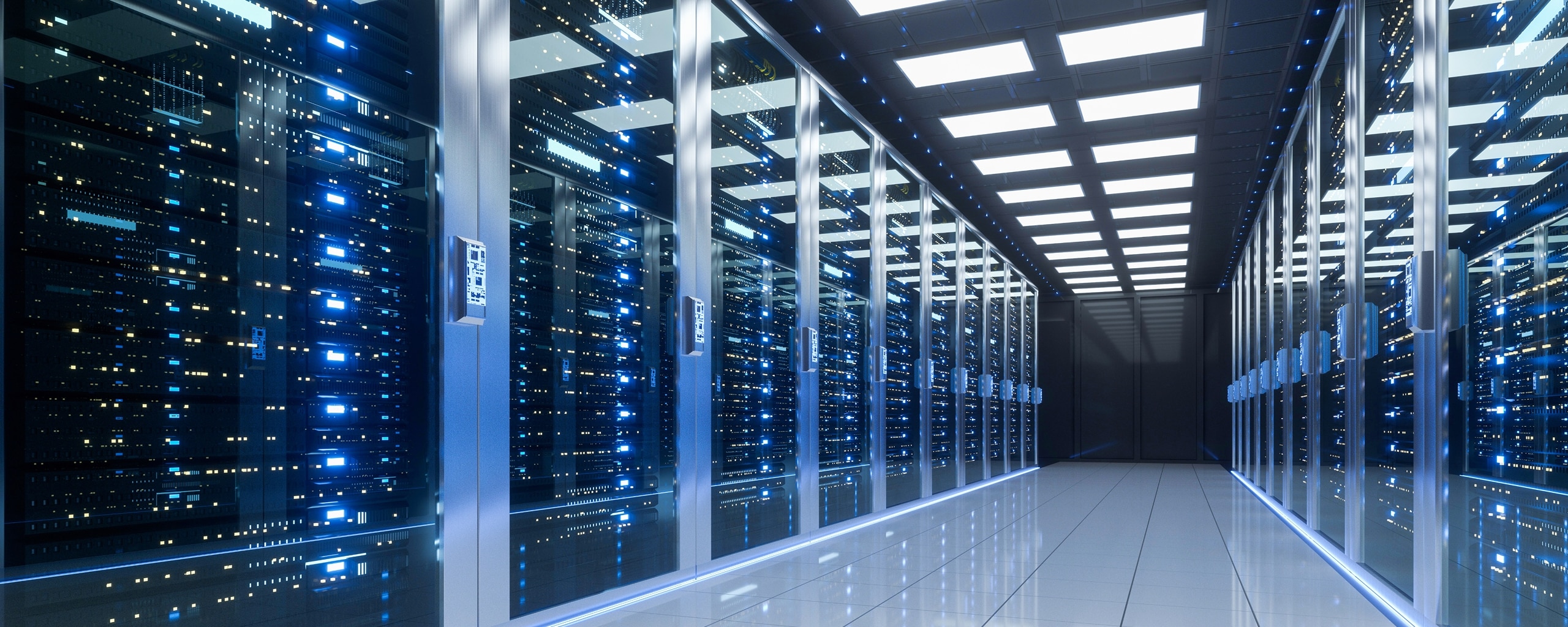
Artificial intelligence (AI) data centers have become one of the dominant forces pushing U.S. electricity demand higher. The dramatic acceleration in the development and use of AI has created a boom in their construction, the scale of which can be difficult to fully grasp.
Indeed, these vast warehouses full of computer equipment and advanced AI chips to train and run AI models are measured in gigawatts (a gigawatt of power being roughly equivalent to the residential power needs for a city of one million people or the output of a typical nuclear reactor).1,2
Today, some 23 gigawatts of data center computing load is online in the U.S., according to data from BloombergNEF. And that figure only counts the electricity for servers, storage and networking equipment. When the total electricity requirements for data centers is measured, including cooling, lighting and other needs, data centers had 41 gigawatts of demand in 2025—the figure has quintupled in a decade.
Another 48 gigawatts of computing load is under construction or committed, meaning land, power and permits have been secured. When giant technology companies such as Amazon, Google, Meta and Microsoft announce they will each spend well over $100 billion a year for multiple years on AI infrastructure, much of that money is going to data centers. 3
The surge in power needs is one of the reasons that electricity demand in the U.S., flat for more than a decade in the 2010s, is now growing steadily. This is straining outdated grid infrastructure and boosting prices for consumers. Additionally, this increase in demand could slow or reverse progress on the transition to green energy. For developers of data centers, securing power has become controversial, and it may be the most significant constraint they face.
Building behind the meter
To keep their projects moving, data center developers and operators are embracing on-site power supplies, also known as behind-the-meter generation. By building their own gas-fired electricity plants, they can get facilities up and running in locations where new supply from the grid would normally take many years.
“Power is the limiting factor in data center growth,” says Martin Mickus, a managing director at Capital One and head of the Technology Media and Telecommunications Investment Research Group. “Data center owners and operators don’t necessarily want the added complexity of generating their own power, but they are investing in it because they know it’s the best path to quickly secure the electricity they need.”
In most instances, they will install a group of small or medium-sized gas turbine generators, along with additional equipment, including batteries, to ensure seamless backup power.4 Almost 100 gigawatts of gas-powered generation was being developed for on-site data center use as of last year, according to Global Energy Monitor.
Data center operators don’t want to be in the electricity business, Mickus explains. It’s typically more expensive to generate on-site because larger plants connected to the grid can be more efficient. Self-generation introduces uncertainties about equipment reliability and lifecycle. While data center operators have been hiring utility industry veterans and generation experts, they would ultimately prefer to keep their focus on the IT technology that they know best.
Finding a path to the grid
As a result, data center operators ultimately want to power their facilities from the grid, even if they rely on behind-the meter generation for now. However, the regulatory structure of the U.S. power industry presents a major hurdle.
While it might seem reasonable to simply add more generation to the grid and upgrade transmission and distribution infrastructure, the issue is how to pay for these improvements. Under the cost-of-service regulation that’s typical in the U.S. utility industry, the cost of new generation and grid infrastructure is shared through higher rates for all power customers, at least within a class such as industrial consumers. Having data centers pay more to cover the cost of their grid requirements in most situations is not possible.
There’s another issue too: The big technology companies driving the explosive growth of data centers, the so-called hyperscalers, have committed to reduce or eliminate their greenhouse gas emissions. Amazon is the world’s largest corporate purchaser of renewable energy. Tech companies, including Amazon, Microsoft, Google, and Meta, have contracted for about 50 gigawatts of renewable power capacity.
Having their data centers connected to the grid would help them meet their commitments, allowing for the delivery of green power from large new wind and solar facilities to their data centers. This would make their commitments more meaningful, as opposed to trading emission reductions elsewhere.
“Data centers are looking for a path to the grid,” Martin explains, to help their end customers meet their carbon-free commitments. “We believe that if the end customer wants green electrons, they will eventually get green electrons.”
As demand for data, power and connectivity accelerates, having the right financial partner matters. Learn more about how Capital One’s Technology, Media & Telecom Banking team can help move your business forward.
References:
-
Nuclear Energy Institute, U.S. Nuclear Operating Plant Basic Information, 2025. https://www.nei.org/resources/statistics/us-nuclear-operating-plant-basic-information
-
Reuters, U.S. faces growing risks of power outages due to rising demand, changing fuel mix, Jan. 29, 2026. https://www.reuters.com/business/energy/us-faces-growing-risks-power-outages-due-rising-winter-demand-changing-fuel-mix-2026-01-29/
-
Yahoo Finance, Big Tech set to spend $650 billion in 2026 as AI investments soar, Feb. 6, 2026. https://finance.yahoo.com/news/big-tech-set-to-spend-650-billion-in-2026-as-ai-investments-soar-163907630.html
-
The New York Times, Why Tech Giants Are Ditching the Power Grid, Mar. 18, 2026. https://www.nytimes.com/interactive/2026/03/18/business/energy-environment/data-center-energy-gas-generators.html