How new weight loss drugs are impacting the food industry
The increased use of GLP-1 drugs is impacting the food industry, reducing purchases in the near-term and shifting consumer habits.
For many years, pharmaceuticals had little to offer to help manage obesity. Now, drugs such as Ozempic, Wegovy and Zepbound are highly successful at helping patients eat less. The arrival of these drugs marks an important change in a country where many people are above a healthy weight, making them vulnerable to diseases that can take years off of their lives.
The new drugs, a category called GLP-1 receptor agonists, are so effective, and already in such wide use, that they are beginning to broadly impact food and beverage sales.
“This has become a headwind overall for food businesses, but there are some surprising positives for the industry as well,” according to Colin Guheen, co-head of the Food & Beverage group at Capital One. The story of how these drugs will change the food and beverage businesses is just beginning, Colin says.
Over 40% of Americans are obese, according to government data that defines the condition as a body mass index (BMI) of 30 and above.1 Even more are overweight but don’t quite meet that definition. Moderate obesity, with a BMI of 30 to 35, can reduce life expectancy by three years.2 More severe obesity, defined as a BMI above 40, can cut eight to ten years from expected lifespan. While BMI is known to be an imperfect measure, it can be useful to track trends and screen patients who might face obesity-related diseases such as type 2 diabetes, hypertension, heart disease, stroke and certain cancers.
Buying fewer calories
A few numbers can help to show how the food industry is being affected—both negatively and positively. About 12% of U.S. adults, or roughly 30 million people, currently take GLP-1 medicines, according to a widely cited survey from the policy and research organization KFF.3 Some studies provide lower numbers, but researchers agree that use of these drugs is climbing.
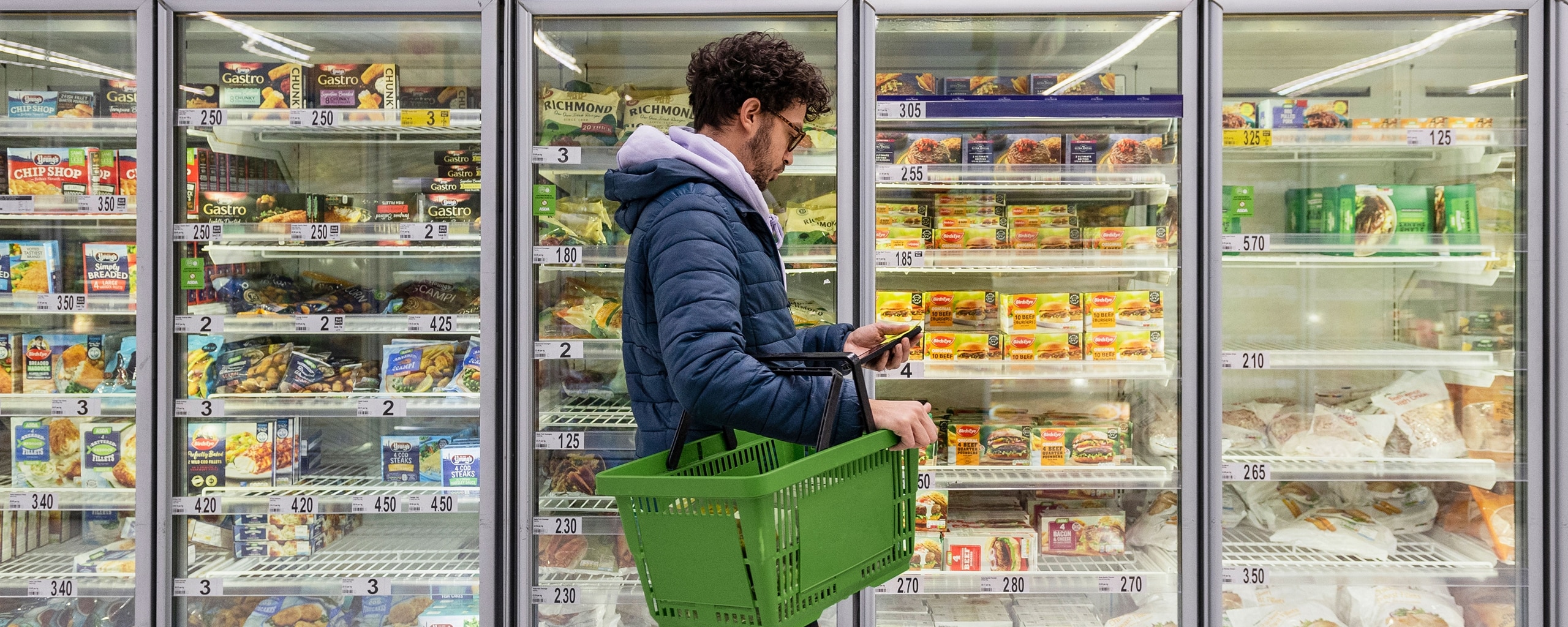
When one person starts a GLP-1 prescription, buying patterns change for an entire household. A recent study by researchers from Cornell University and the market data firm Numerator found that household grocery spending may drop by 8% or 9% in the first six months after an obese person started on these drugs.4 In some categories, the decline was even steeper: Household spending on salty snacks fell by 24%, for instance, and sweet bakery purchases dropped 18%. Fast food restaurant purchases declined as well.
For people taking GLP-1s, declines in grocery purchases come mostly in the first six months, and by the second year on these medicines, food purchase fluctuations level off. A portion of those who start on the drugs discontinue their use, and among these people, food purchases rebound.

In other words, the biggest decline is tied to new prescriptions of GLP-1 drugs—people starting on these treatments. And that number appears to be rising as drug makers develop new versions, including oral medicines in place of injections and products approved for different diseases. Costs for these drugs are coming down, insurance coverage may become more widespread, and some initial supply shortages have recently been resolved.
With short term declines in food consumption tied to new adoption rather than the overall population of users, the impacts are spread over time and more muted in a given year than total user numbers might suggest. This impact will continue as adoption ramps up to a peak over the next few years.
Buying more over a lifetime
That initial decline in food purchases, though, is only one factor to be weighed by the food industry. Other trends related to the growth of GLP-1 medicines may cut the other way for food businesses.
“With the food industry being tied to population growth over time, reductions in obesity-related mortality will be a net positive,” says Mike Blommer, a food and beverage data specialist at Capital One. “Even in aggressive scenarios for reduced consumption related to GLP-1 use, modest gains to life expectancy can more than offset the impact over time.”
Indeed, because obesity-related diseases cut years off average lifespans, treatment with GLP-1 drugs can add years (up to 14 years) to the lives of those who take them. While food spending in the first year of GLP-1 use can decrease up to 9 percent, by year two it quickly rebounds to pre-GLP-1 spending levels. And longer lifespans due to the use of GLP-1s mean more years of consumption overall. In that sense, GLP-1 medicines should be a net positive for the food industry longer-term, even if some businesses must weather short-term impacts.
Engaged consumers
“The food companies we work with are watching closely to see how this unfolds and the impact that GLP-1 drugs have on purchasing trends,” says Paul Baisley, co-head of the Food & Beverage Group at Capital One. “Another interesting development is how someone with a new GLP-1 prescription suddenly becomes much more engaged with health and wellness. We can see this in the food products they buy or don’t buy.”
Along with the drop in purchases of sweets and snack products, for example, there are immediate jumps in purchases of other foods such as meat snacks and yogurt, according to the Cornell-Numerator research. Category strategy is in full focus as the behavior of GLP-1 users becomes more clear, with brands in the right spaces already seeing significant volume gains.
For marketers, this presents a unique opportunity to tap into a customer base undertaking active behavioral change. Research has shown that long-term changes to a person’s diet have in the past been rare, even in cases of severe disruption like a new diabetes or hypertension diagnosis.5 Now, GLP-1s have proven remarkably successful in changing dietary habits in such instances.
Food companies are leaning into this trend, finding ways to tap this consumer base that is actively engaged in long-term behavioral change—and trying new products. As adoption of GLP-1s continues to become more and more mainstream, this trend will only intensify. Successful marketers will play an active role in these conversations and drive volume off meeting these customers where their new behaviors bring them.
“Enough people are taking these drugs that they almost certainly are discussing this at the gym or at parties or at work,” Paul says. “This is a moment when consumers are going to be open to new products and new marketing messages.”
Explore how Capital One’s Food, Beverage & Agriculture team helps businesses navigate evolving industry trends.
References:
-
Centers for Disease Control and Prevention, National Center for Health Statistics. Obesity and Severe Prevalence in Adults: United States, August 2021-August 2023. NCHS Data Brief No. 508, September 2024. https://www.cdc.gov/nchs/products/databriefs/db508.htm?
-
University of Oxford, Moderate Obesity Takes Years Off Life Expectancy. March 18, 2009.https://www.ox.ac.uk/news/2009-03-18-moderate-obesity-takes-years-life-expectancy
-
KFF, Poll: 1 in 8 Adults Say They Are Currently Taking a GLP-1 Drug for Weight Loss, Diabetes or Another Condition. Nov. 14, 2025.https://www.kff.org/public-opinion/poll-1-in-8-adults-say-they-are-currently-taking-a-glp-1-drug-for-weight-loss-diabetes-or-another-condition-even-as-half-say-the-drugs-are-difficult-to-afford/
-
Hristakeva, S., Liaukonytė, J., & Feler, L. The No-Hunger Games: How GLP-1 Medication Adoption Is Changing Consumer Food Demand. Journal of Marketing Research, 2025. https://doi.org/10.1177/00222437251412834
-
Ma, Y., Ailawadi, K., Grewal, D. (2013). Soda versus cereal and sugar versus fat: Drivers of healthful food intake and the impact of diabetes diagnosis. Journal of Marketing 77(3), 101–120.