Capital One takes action to disrupt robocaller scam networks
Capital One lawsuit seeks to protect consumers by exposing scammers
MCLEAN, VA
Today, Capital One filed a lawsuit aimed at identifying and confronting scammers that use spoofing tactics to deceive consumers by impersonating the Capital One brand through text, phone call communications, and the creation of fake emails and websites. The trademark infringement case – filed in a federal court in the Eastern District of Virginia – represents one of the only legal levers currently available to companies seeking to identify and hold accountable the often anonymous networks perpetrating financial schemes against U.S. consumers. The suit is filed on the heels of The Federal Communications Commission’s (FCC) announcement on a renewed focus on combatting illegal robocalls.

Financial scammers use numerous phone, text, and digital platforms, making them difficult to detect and stop through conventional approaches. In the case of spoofing, bad actors impersonate trusted brands and logos to create phony emails, websites, text messages and phone solicitations. Capital One has taken other steps to prevent these fraudulent solicitations, including being one of the first banks to work with telecommunications carriers to adopt fee-based services that protect the company’s phone numbers from being spoofed. That service alone has allowed Capital One to block several million spoofing attempts against the company’s toll-free numbers, branch numbers, and Café numbers since implementation last year. However, these services only help prevent spoofing of the company’s information for phone calls and cannot stop scammers from spoofing text messages, email communications, or websites. This lawsuit seeks to create more efficient pathways for stopping those impersonations before they reach and harm consumers.
Impersonation scams have become increasingly sophisticated and pose a widespread threat to industries and consumers alike. Reports have shown the international nexus of scams and the rapidly evolving state of financial crimes. A recent Interpol report stated “with increased global criminal collaboration, fraud is no longer a peripheral threat, it is at the centre of polycriminality, intersecting with organized crime, human trafficking and cybercrime.” According to the Federal Trade Commission, imposter scams cost consumers nearly $3 billion in 2024. These operations exploit gaps across industries to scale deception quickly, making them difficult for any one institution to address alone.
“Protecting our customers is at the heart of everything we do,” said Chad Miller, Vice President, Customer Protections. “For years we’ve invested in advanced technology, training, and tools to help detect and prevent financial misconduct. But stopping these scammers requires more than strong defenses. It means going on offense to expose and disrupt the networks that enable these schemes and prevent harm to our customers. That’s exactly what this action is intended to do.”
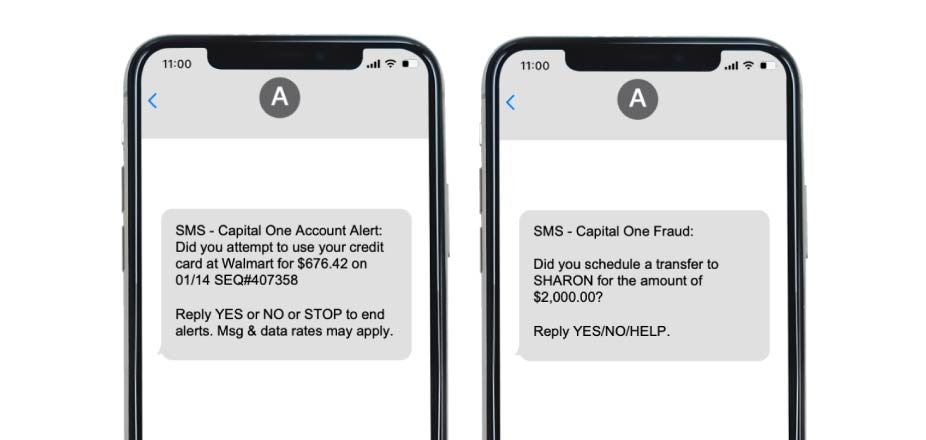
What these fraudulent messages look like
As financial scammers adopt new technologies, their increasingly sophisticated solicitations can look very similar to authentic communications from financial institutions and other reputable organizations. The following are examples of fraudulent communications.


A complex challenge requiring collective action
Scams have escalated to a multifaceted challenge leveraging sophisticated tools that impacts many industries and requires a whole of society approach to address. As part of this comprehensive strategy, the government is shifting its focus towards preventative measures to protect consumers. In a recent FCC notice of proposed rulemaking, the U.S. government is taking proactive steps to tackle the problem at every stage of a call’s lifecycle including tightening how phone numbers are used and obtained to stop scammers before a call originates.
"For too long, legal efforts to combat financial crime in the United States have focused primarily on domestic actors, but the sophisticated online scamming operations targeting Americans are overwhelmingly run by transnational organized crime groups that are purpose-built to exploit jurisdictional gaps,” said Nils Mueller, Director, North America Chapter, Global Anti-Scam Alliance (GASA). “By targeting the actors and infrastructure enabling these scam operations, Capital One is sending a signal that global scam networks can no longer hide behind borders. This is not just about stopping scam texts and calls. It is about dismantling the financial and technical pipelines that allow organized crime to operate at scale," Mueller stated.
Financial institutions like Capital One are just one part of a much larger ecosystem that bad actors seek to exploit. Capital One has long called for cross-sector approaches to address these challenges, including stronger coordination across financial institutions, telecommunications providers, technology platforms, law enforcement and government.
Legal pathways for cracking down on scammers are convoluted
Capital One’s lawsuit is focused on trademark infringement and counterfeiting with respect to its logo and brand. This lawsuit is not aimed at a single entity – it’s targeting multiple individuals and entities that are exploiting the legal and physical gaps, hiding behind jurisdictional complexity, and relying on a digital border to evade accountability for their misconduct.
Building on a longstanding commitment to customer protection
This legal action builds on Capital One’s ongoing investments in technology, data, and partnerships to help protect customers and stay ahead of evolving threats. Capital One works across industries to proactively identify, notify, and take down fake websites and communications targeting our customers. These investments include advanced fraud detection capabilities, real-time alerts, ongoing customer education and coordination with law enforcement and groups like GASA, National Elder Fraud Coordination Center (NEFCC) and Gift Card Fraud Prevention Alliance.
While investing in strong customer protections and identifying industry solutions are critical, Capital One believes this lawsuit will help disrupt the underlying networks enabling financial schemes.
“This is about protecting people and the trust they place in their financial institution,” Miller added. “We will continue to use a variety of approaches —including technology, partnerships, and legal action — to help stop financial scams and keep our customers safe.”
For more tips on how to avoid scams and protect yourself, visit www.CapitalOne.com/StopScams.
All claims asserted in the complaint are allegations only, and no judicial determination of liability has been made at this stage of the proceedings.