What Is Honda Sensing?
Honda’s suite of driver-assistance tech combines safety and convenience features.
 Apr 11, 2022 | 3 min read


 Honda
Honda
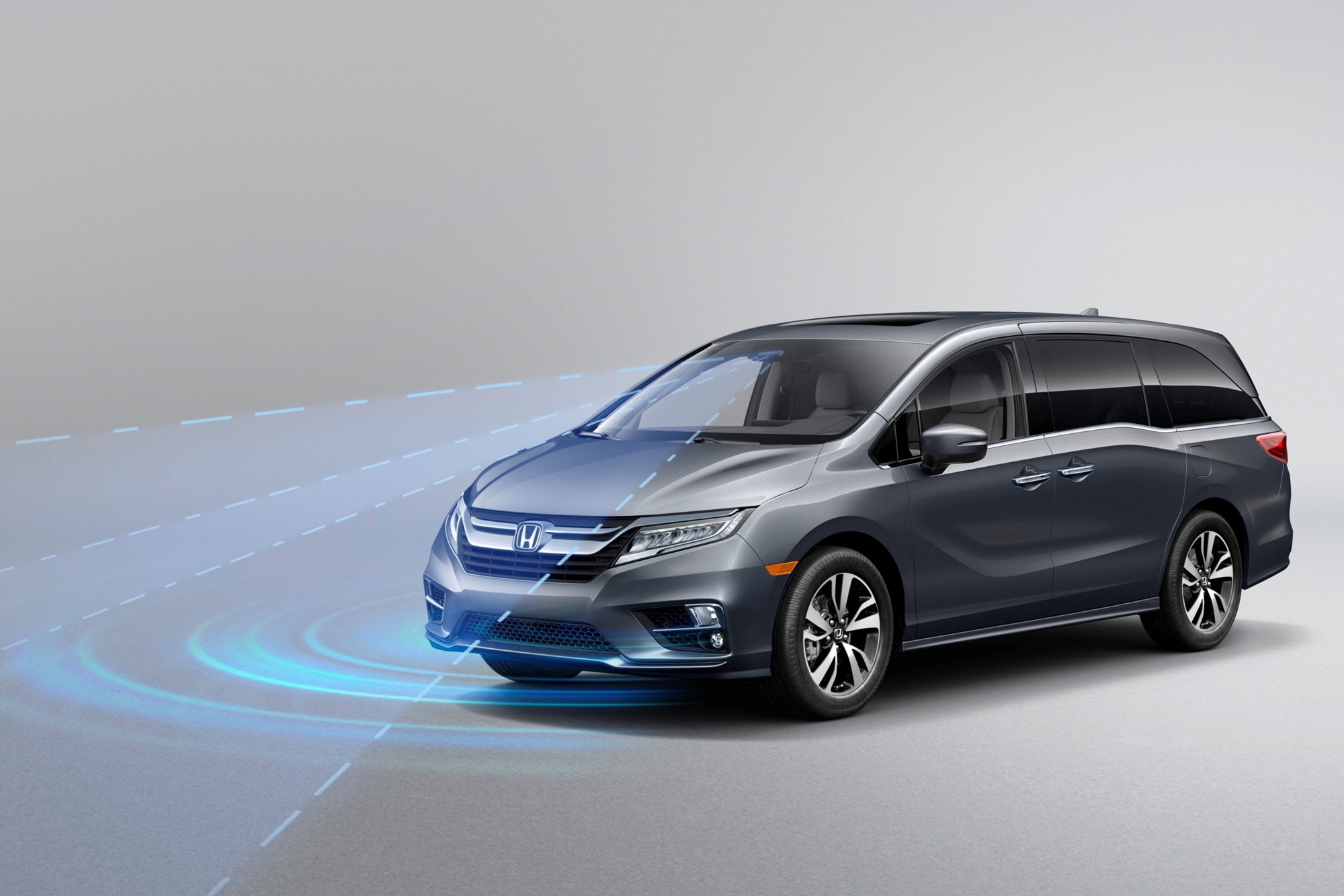
More and more automakers are offering advanced safety features as part of a branded package, like Nissan’s Safety Shield 360 or Toyota Safety Sense. Honda’s version is called Honda Sensing, and it is a standard package of advanced driver assistance system (ADAS) features found on almost all of the company’s new cars, SUVs, trucks, and vans.
Honda first used the Honda Sensing name on the 2015 Honda CR-V and has changed what technologies define the suite in the intervening years. Honda says some version of Honda Sensing can be found on almost 5 million Honda vehicles in the U.S. today.
What Are the Main Features of Honda Sensing?
The standard Honda Sensing package includes automated emergency braking with forward collision warning, adaptive cruise control, lane-keeping assistance, and lane-departure warning with road departure mitigation, which can steer and brake the vehicle if you cross a lane line without signaling. More advanced Honda Sensing features are available on higher trim vehicles and include technologies like blind-spot monitoring, traffic jam assist, traffic sign recognition, and a driver attention monitor.
When the latest 2022 Honda Civic compact debuted, Honda introduced a new version of Honda Sensing that uses a single-camera system with a broader detection field than the previous radar-and-camera-based system. Combined with a faster processor and software advances, the system can more quickly and accurately identify pedestrians, bicyclists, and other vehicles, along with road lines and road signs. Other features have also improved, such as more natural braking and acceleration when using the adaptive cruise control and smoother tracking when using the lane-keeping assist.
Drivers Can Tailor Honda Sensing to Their Needs
Drivers have control over how some of these features work. Road departure mitigation, for example, has four settings (Normal, Wide, Narrow, and Warn Only) so that the vehicle can provide an alert (an audible tone or by vibrating the steering wheel) before the car takes its mitigation efforts to stay on the road or it can be set to warn the driver but not take action.
When a Honda Sensing feature includes the word “warning,” that means the car will alert you when it thinks an incident is about to happen, while “mitigation” means the vehicle will actively intervene "to help avoid a collision or mitigate its severity,” Honda says.
Will Honda Sensing Allow for Self-Driving?
None of these technologies, even all of them taken together, allow a Honda vehicle to offer any self-driving ability. Instead, these safety features are meant to provide more information and assistance to a driver who might otherwise make a mistake or fail to react to a potential problem.
How Much Does Honda Sensing Cost?
As of the 2021 and 2022 model years, Honda Sensing is now standard or available on all new Honda models. Honda doesn’t offer Honda Sensing as a distinct package in its vehicles. Instead, you have to jump to a higher vehicle trim level to get the more advanced features.
For example, on the 2022 Honda CR-V compact crossover, Honda Sensing is standard on the base LX trim, starting at $27,625 with destination fees. But to get the blind-spot information system with cross-traffic monitoring, you need to start with the EX trim, which starts at $30,135.
Written by humans.
Edited by humans.
Sebastian BlancoSebastian Blanco has been writing about electric vehicles, hybrids, and hydrogen cars since 2006. His first green-car media event was the launch of the first Tesla Roadster in 2006, an event where he almost elbowed Arnold Schwarzenegger in the groin. Since then, he has been tracking the shift away from gasoline-powered vehicles and discovering the new technology's importance not just for the auto industry, but for the world as a whole.
Related articles
View more related articles