2026 Nissan Leaf Review
With longer range, improved technology, and a low price, the redesigned 2026 Leaf spells value.

 Perry Stern
QuickTakes:
Electric vehicles are more common than ever, and there are plenty of choices for consumers. However, in 2010, there was only one mainstream EV: the original 2011 Nissan Leaf. That groundbreaking Leaf could only go 73 miles on a charge, but it was a revolutionary vehicle at the time.
Fifteen years later, the redesigned, third-generation 2026 Nissan Leaf sports an all-new look, a high-tech interior, improved driving range, and an affordable base price. With a new electric motor and a larger battery, the 2026 Leaf boasts an estimated range of up to 303 miles. That, and the claimed lowest starting price of any new EV, should make the all-new Leaf quite appealing.
The 2026 Leaf's longer driving range and low cost check two critical boxes for car shoppers, and the EV's extensive standard equipment list is appealing, and the available power is more than adequate for daily driving duties. Clearly, the Nissan Leaf has come a long way since 2010.
 Perry Stern
About the 2026 Nissan Leaf Platinum+
The 2026 Nissan Leaf is available in S+, SV+, and Platinum+ trim levels. Base prices range from around $30,000 to about $40,000, including the destination charge for shipping it to your local dealership from the assembly plant in Tochigi, Japan. Nissan says an entry-level S trim with a smaller battery will arrive later in the model year, making the EV even more affordable.
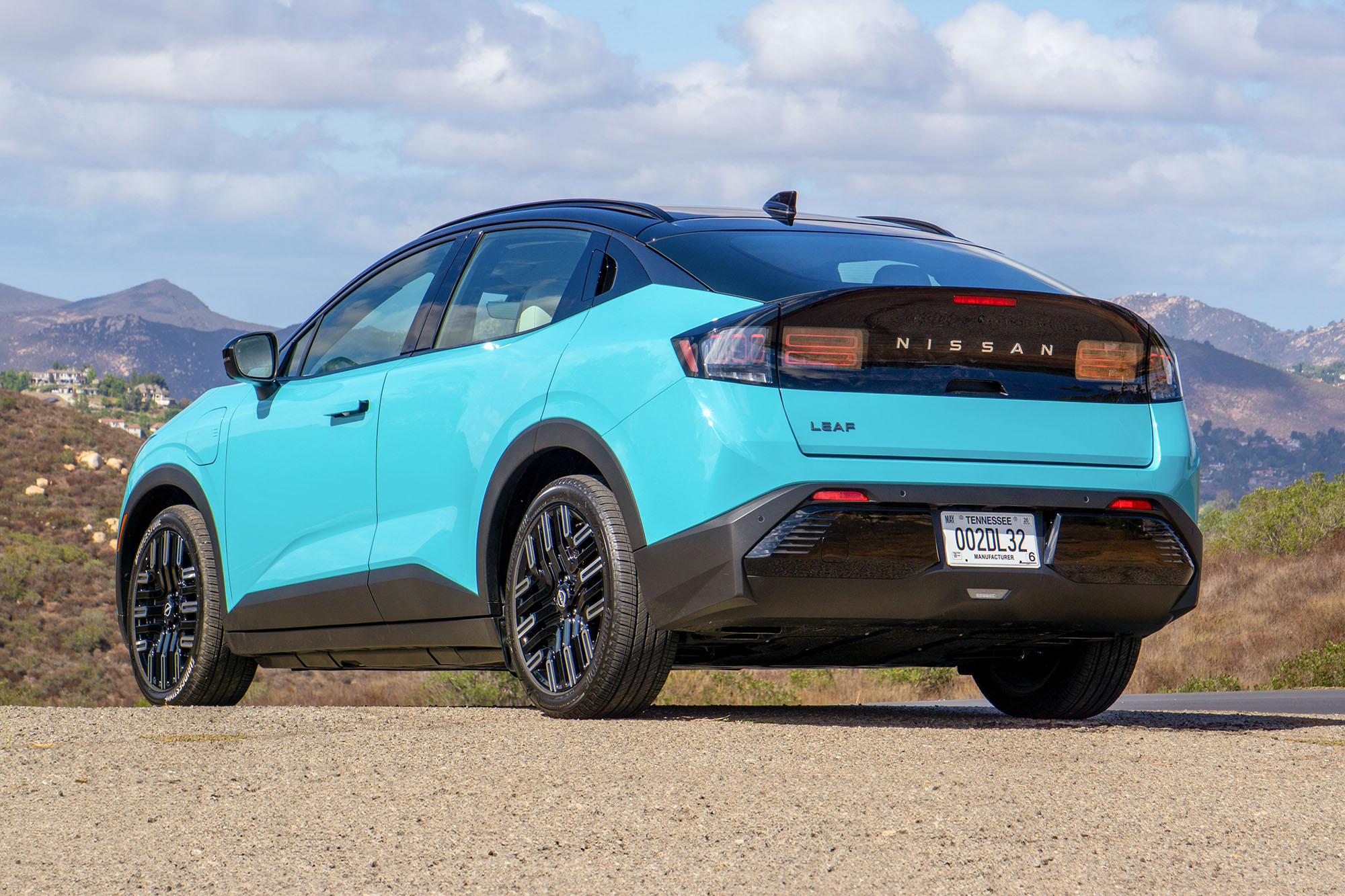
Nissan invited me to San Diego, California, where the automaker provided a 2026 Leaf Platinum+ for review. Optional equipment included premium two-tone paint, a battery heater, and floor mats, increasing the manufacturer’s suggested retail price to $41,930, including the $1,495 destination charge. Nissan covered the costs of airfare, lodging, and meals during the evaluation period.
 Perry Stern
Modern Styling With a Premium Interior
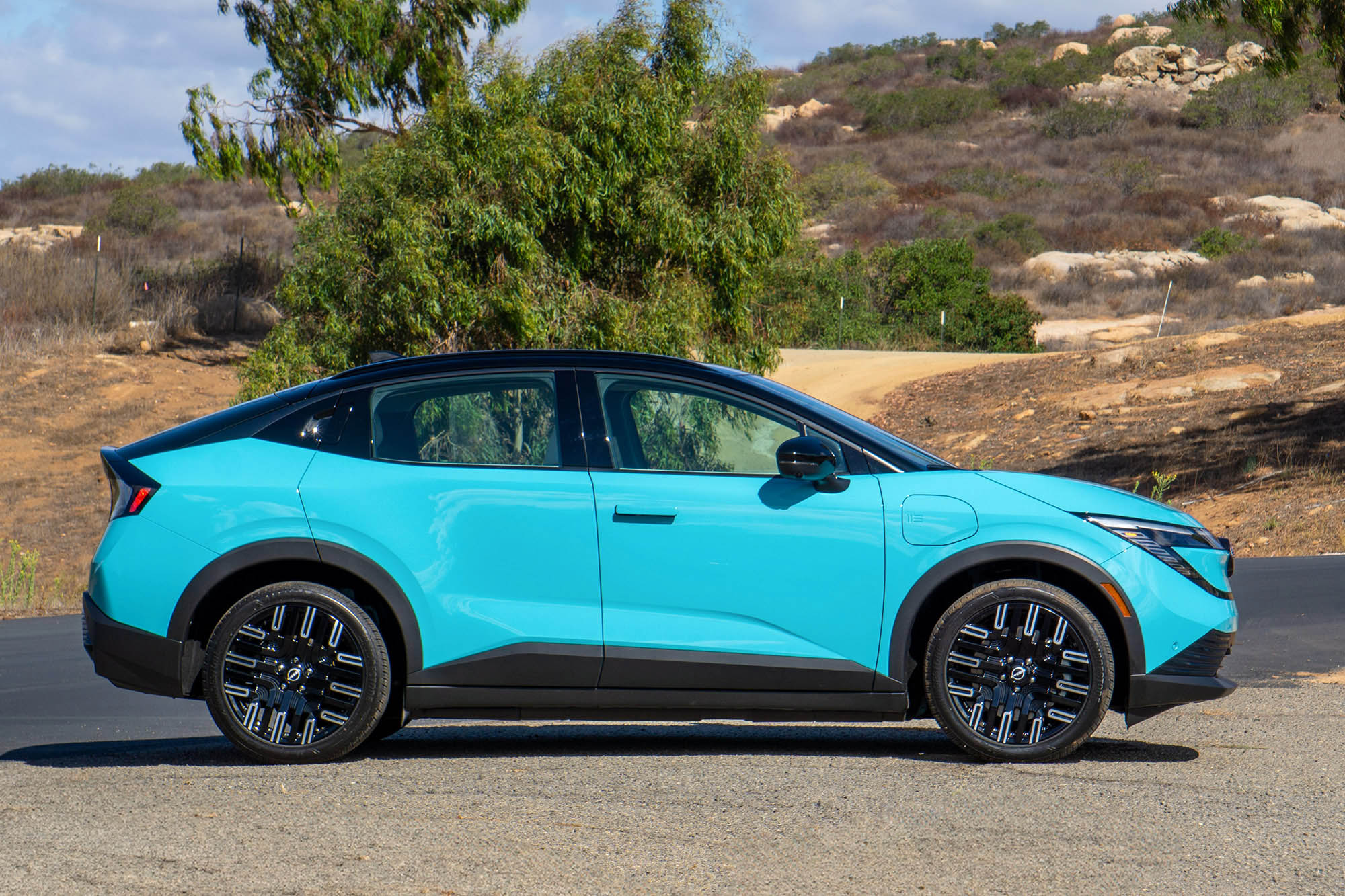
The 2026 Nissan Leaf features a completely new look that lowers the aerodynamic coefficient of drag from 0.29 to 0.26, making it more efficient. While the new Leaf is wider than its predecessor, its dimensions are shorter in length and height. Stylish LED running lights stretch across the hood line and flow around the headlights, creating a new visual representation of Nissan’s familiar V-Motion grille. The 3-D taillights have two horizontal and three vertical bars representing the company’s name: 2-3 is pronounced "ni-san" in Japanese.
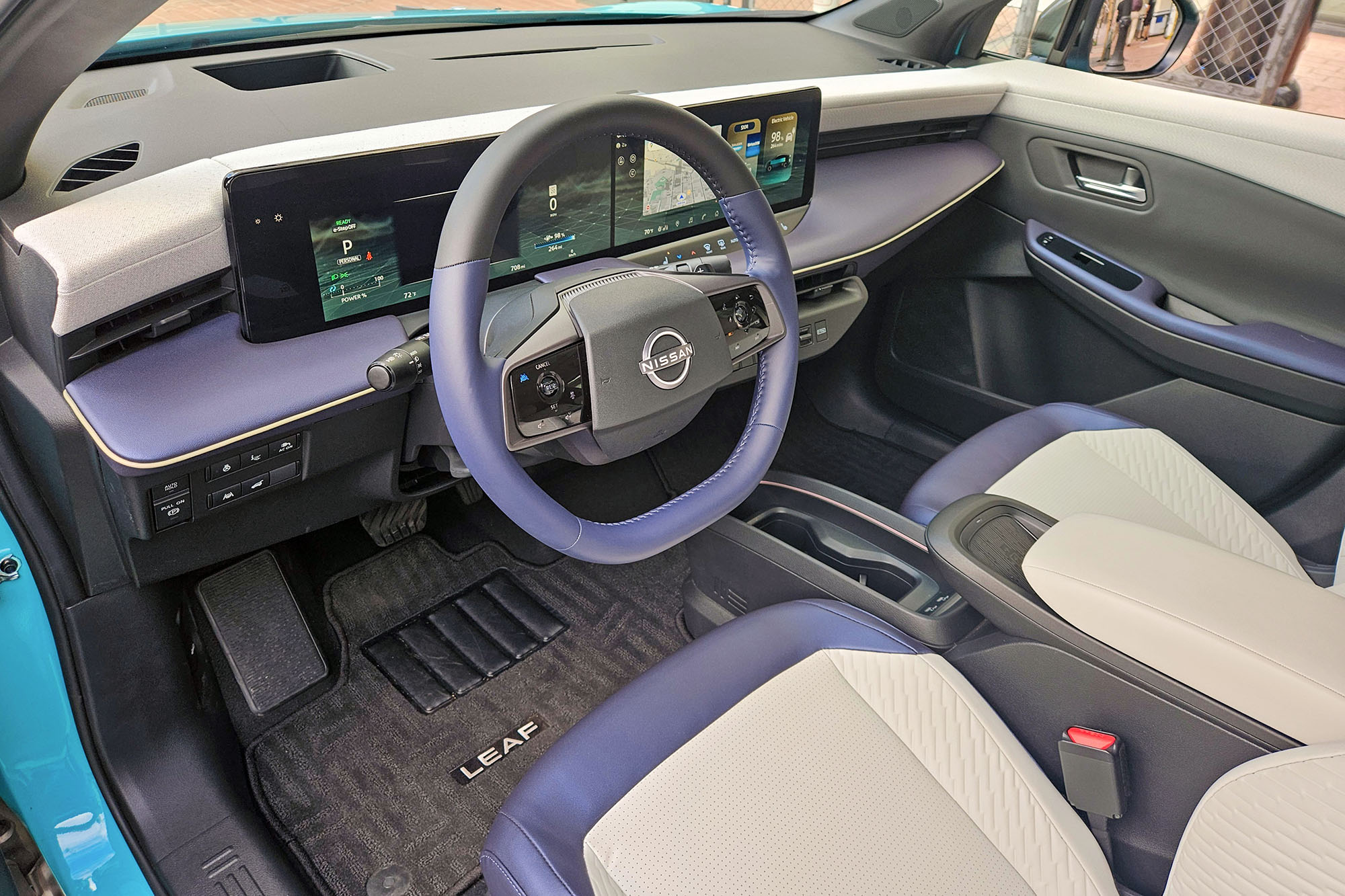
Inside, the cabin features an open, uncluttered look, highlighted by a large display consisting of dual 12.3-inch or 14.3-inch screens for the instrumentation and infotainment system. An integrated panel below the display provides quick access to climate functions via soft-touch controls, with most other settings found in the infotainment display. While I don't think the gear selector and drive mode button integrate well with the rest of the design, they are easily accessible to the driver.
Most interior materials have a premium look, and I especially like the fabric at the top of the dashboard and doors, elevating the overall style. There are some harder plastics on the lower parts of the cabin, but they don’t look or feel cheap. My Leaf Platinum+ test vehicle also had an electronically dimmable panoramic sunroof, eliminating the need for a sunshade.
 Perry Stern
The new Leaf includes Nissan’s Zero Gravity seats, designed to provide comfort and support while reducing driver fatigue. It sounds gimmicky, but they perform as advertised. Trimmed in soft TailorFit synthetic leather, the seats are quite comfortable and remain so after several hours behind the wheel.
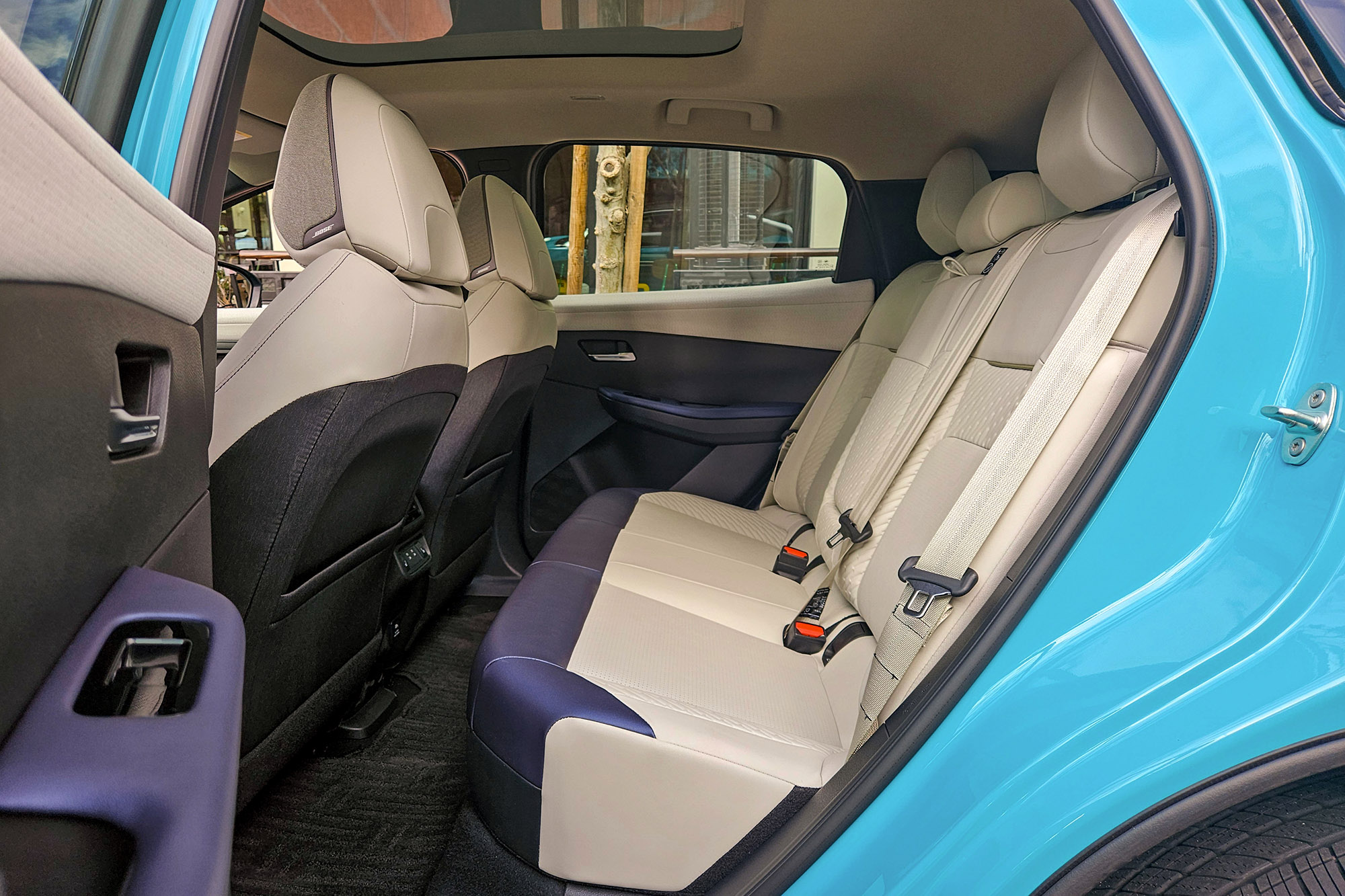
Adult passengers may find the rear seats to be a tight fit, as the 2026 Leaf loses almost 2 inches of legroom compared to the outgoing model. However, dual USB-C ports, available outboard heated seats, and a flat floor help to make the space more comfortable.
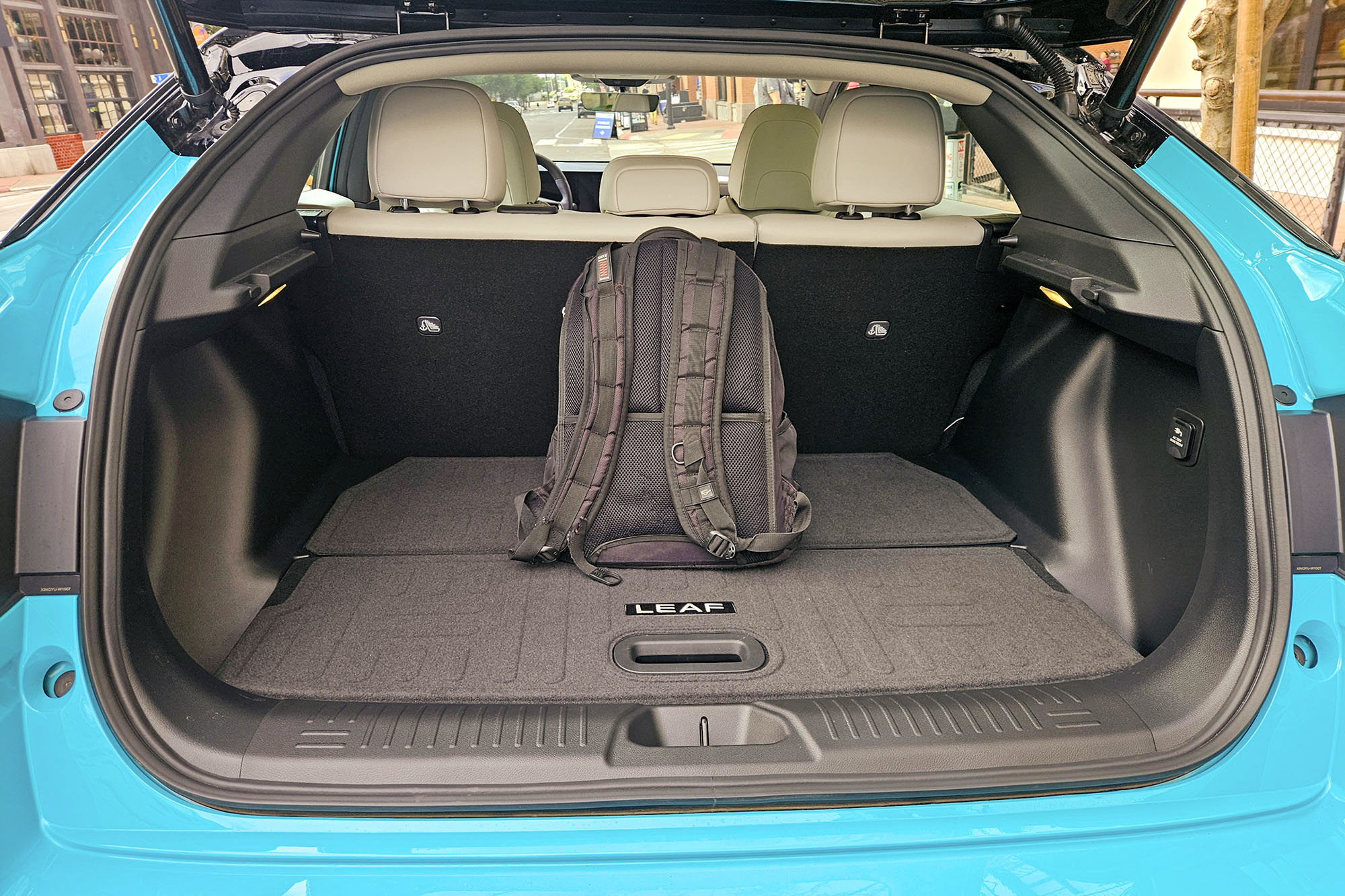
The new Leaf also offers a bit less cargo space, but its 20 cubic feet is still more than enough for a few suitcases or a bunch of groceries. Fold down the rear seats and there’s a plentiful 55.5 cu-ft of storage. Two panels in the floor can function as dividers, adding versatility. Don't look for a frunk, though, because the Leaf has no additional storage under the hood.
 Perry Stern
Advanced Infotainment and Safety Technology
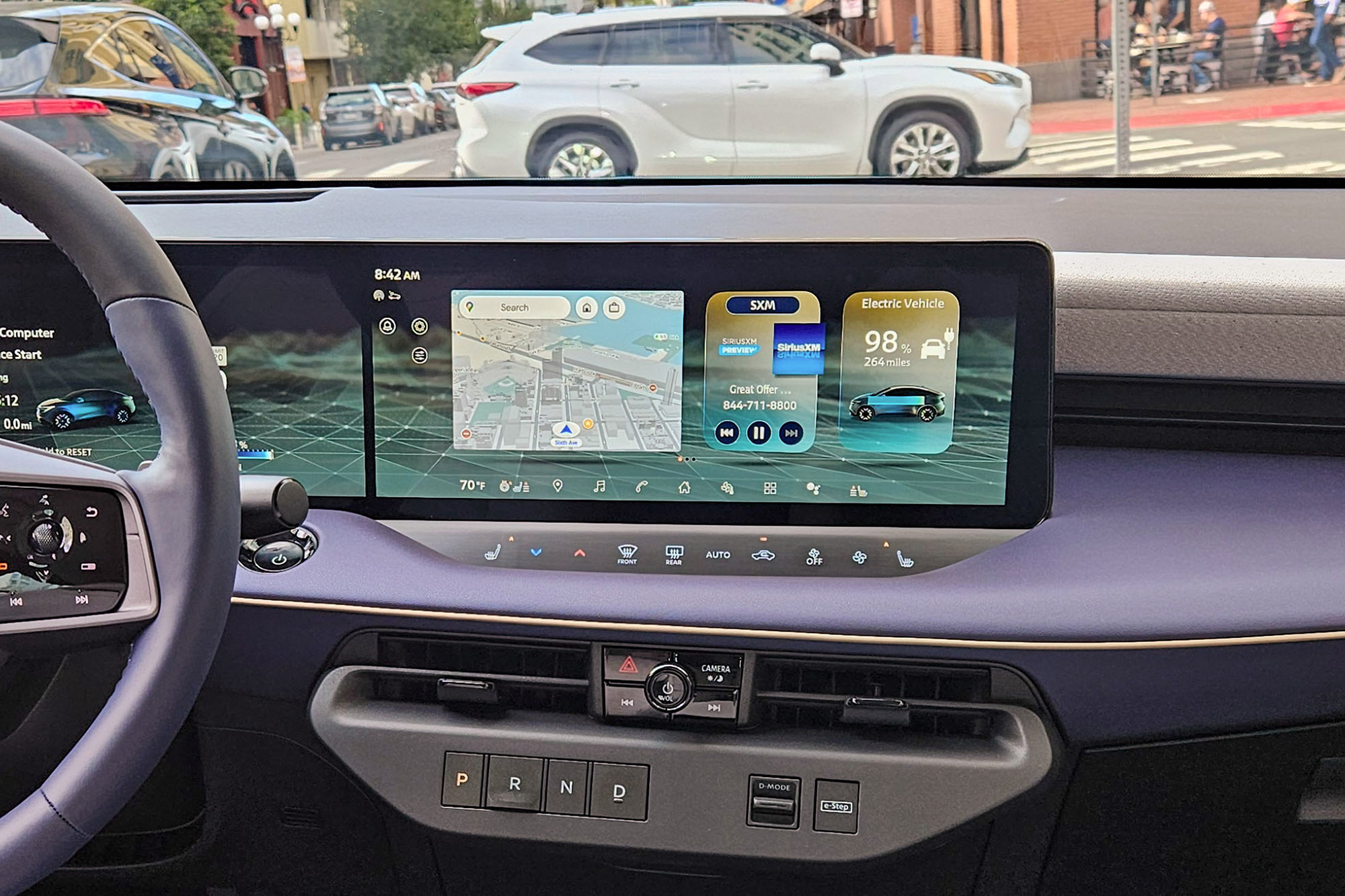
On the more expensive trim levels, Nissan upgrades the 2026 Leaf’s infotainment to a Google built-in system, representing a significant improvement over the previous model. Displayed on a new 14.3-inch touchscreen, it features large, easy-to-read floating tiles that are swipeable left to right. Shortcuts to applications, such as navigation, media, and communications, remain static at the bottom of the screen.
Wireless Apple CarPlay and Android Auto are standard, although the Google-based system can almost replicate the Android Auto experience. Google Maps is the native navigation system, and with access to the Google Play Store, owners can download popular applications like Spotify and Waze. Video streaming services are also available for added entertainment options while parked and charging.
The Google Maps integration offers all the benefits of this popular navigation system, while also adding EV-specific features. With a destination programmed, the map shows the time en route as well as the expected remaining battery charge upon arrival. For longer trips, the route can include charging stations and will show a total time in transit, including recharging time.
 Perry Stern
Every 2026 Leaf includes Nissan Safety Shield 360, a collection of advanced driver-assist systems (ADAS). In addition to the typical ADAS features, the Leaf features Secondary Collision Mitigation Braking, which applies the brakes following an initial collision to prevent the Leaf from rolling into another vehicle or pedestrian.
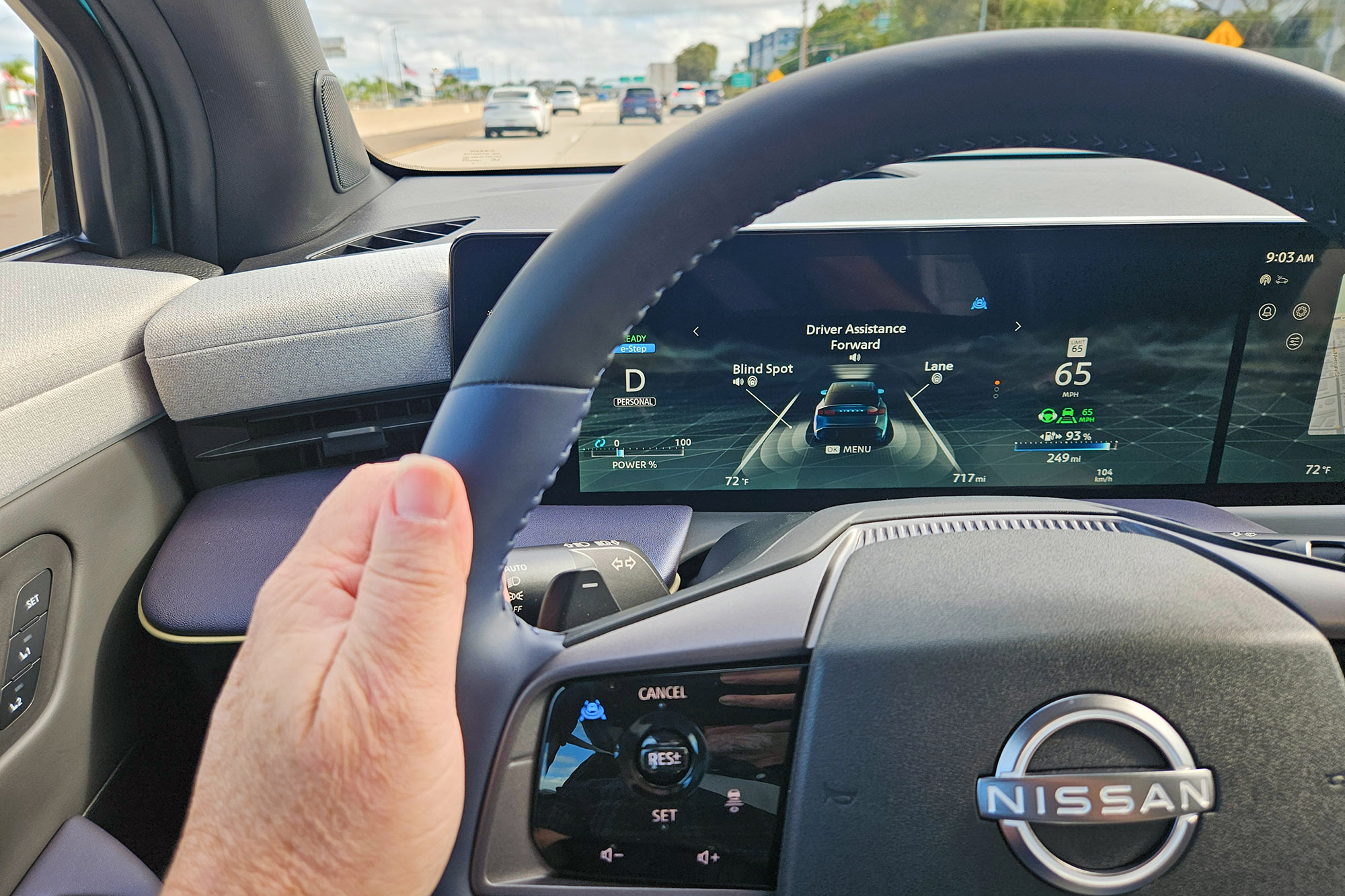
The Leaf also comes with ProPilot Assist, which combines the adaptive cruise control with lane-centering assist for a hands-on, semi-autonomous driving experience. I tested this tech on a freeway near San Diego, activating the system via the blue-lit button on the steering wheel.
At 65 mph, ProPilot Assist worked smoothly, keeping the Leaf a set distance from the vehicle ahead and maintaining its spot in the center of the lane. Bends in the highway were no concern as the system provided accurate steering input to navigate them. In more pronounced curves, the system automatically slowed the Leaf for an extra measure of safety, but did so reactively instead of proactively, which is a less desirable approach.
Remember, this is not a hands-free system, and a warning comes up after a few seconds if your hand isn’t on the steering wheel.
 Perry Stern
Competent Daily Driver
The third-generation Nissan Leaf gets a new electric motor with 214 horsepower and 262 pound-feet of torque. Smaller and quieter than the previous version, the new powertrain is more efficient with smoother power delivery. The motor powers the front wheels, and a new
Nissan estimates that the 2026 Leaf Platinum+ gets an estimated 103 MPGe in combined city and highway driving, with a range of 259 miles. (If you want the Leaf with 303 miles of range, choose the S+ trim level.) With a 98% charge, I drove the Leaf 161 miles and had a remaining range of 90 miles at the end of my evaluation, indicating a total of 251 miles. That's pretty close to the Nissan estimate. The trip computer showed an average of 3.1 miles/kWh, or just over 104 MPGe.
 Perry Stern
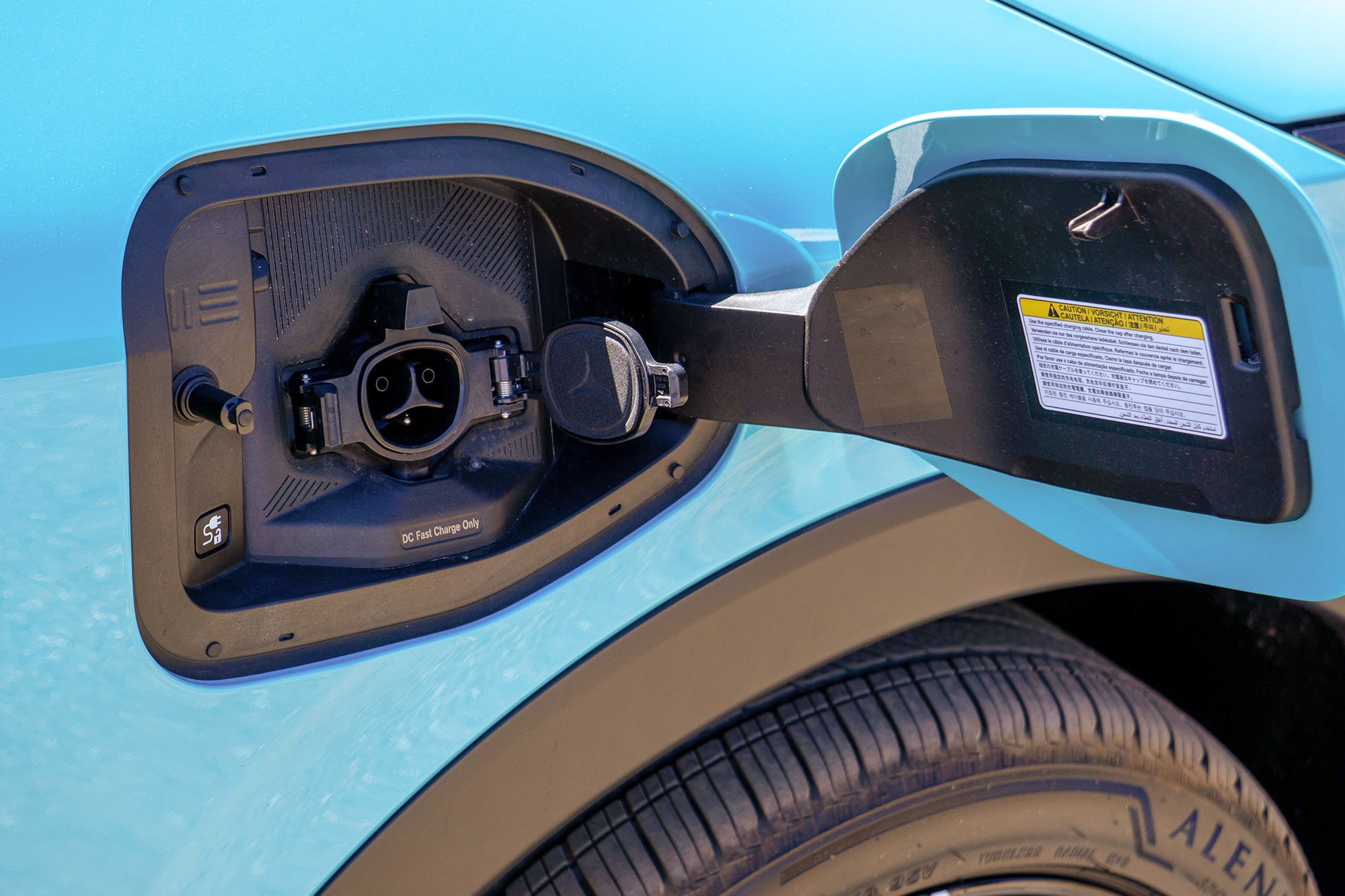
The Leaf has two charge ports, an unusual setup for an EV. On the left front fender is a traditional AC port compatible with a Level 2 home charger at up to 7.2 kilowatts (kW), while on the right is a North American Charging Standard (NACS) port for DC fast charging at speeds up to 150 kW. At maximum charging speed, the Leaf takes about 35 minutes to get from 10 to 80 percent, which is quicker than a Kia Niro EV.
As with other EVs I’ve driven, the Nissan Leaf delivers quick response from a stop, easily getting through a busy intersection. However, that punch of strong acceleration is short-lived, and beyond 30 mph, the Leaf no longer feels quick. Performance is certainly adequate, and the Leaf can easily reach highway speeds, but the little EV isn’t going to win any races.
The ride is comfortable while driving around town or cruising on the highway, and the Leaf nicely absorbs all but the worst bumps for a smooth ride. Some wind noise comes from the mirrors at higher speeds, but it's not so loud as to be an issue. Handling is fine for most driving situations, but the steering felt light without much feedback when driving with enthusiasm on a winding mountain road.
 Perry Stern
Is the 2026 Nissan Leaf a Good Electric Vehicle?
If you're looking for an affordable EV that doesn’t cut corners on features or driving range, the 2026 Nissan Leaf is a good choice. Rivals such as the Chevrolet Equinox EV, Hyundai Kona Electric, and Kia Niro EV are compelling alternatives, but they have higher starting prices, and the latter two don’t offer the driving range of the Leaf.
With an extensive standard equipment list, a stylish cabin, advanced technology, and good performance, the third-generation 2026 Nissan Leaf brings a lot of value for the money.
This site is for educational purposes only. The third parties listed are not affiliated with Capital One and are solely responsible for their opinions, products and services, and all trademarks listed are the property of their respective owners. Capital One does not provide, endorse or guarantee any third-party product, service, information or recommendation listed above. The information presented in this article is believed to be accurate at the time of publication, but is subject to change. The images shown are for illustration purposes only and may not be an exact representation of the product. The material provided on this site is not intended to provide legal, investment, or financial advice or to indicate the availability or suitability of any Capital One product or service to your unique circumstances. For specific advice about your unique circumstances, you may wish to consult a qualified professional.
Related articles
View more related articles