2026 Jeep Recon Review
Our automotive expert shares opinions and new photos of the 2026 Recon.

- Pros: Jeep's new electric SUV brings a unique combination of off-road capability, cool looks, and convertibility.
- Cons: The uncompetitive driving range and high price dampen the appeal.
- The Takeaway: The new Jeep Recon is a lot of fun, but the cons outweigh the pros.
It's easy to love the 2026 Jeep Recon. It looks really cool. Its removable doors and windows and giant sunroof make it a quasi-convertible. It has real off-road capability. It hits 60 mph in 3.6 seconds, which is overkill, but fun nevertheless. It also doesn't burn gasoline — hooray for Earth. Unfortunately, and it's a big "unfortunately," the Recon's electric range is so uncompetitive, and its price tag is so high, that being lovable may not be enough.
What's New for the 2026 Jeep Recon
The Recon is an all-new addition to the Jeep lineup. It's an entirely electric midsize crossover SUV with elements inspired by the Jeep Wrangler, including removable windows and doors, an available retractable cloth sunroof, a rear swing gate, off-road capability, and, of course, its styling. All of that makes the Recon stand out from other electric SUVs.
About the 2026 Jeep Recon Moab Review Vehicle
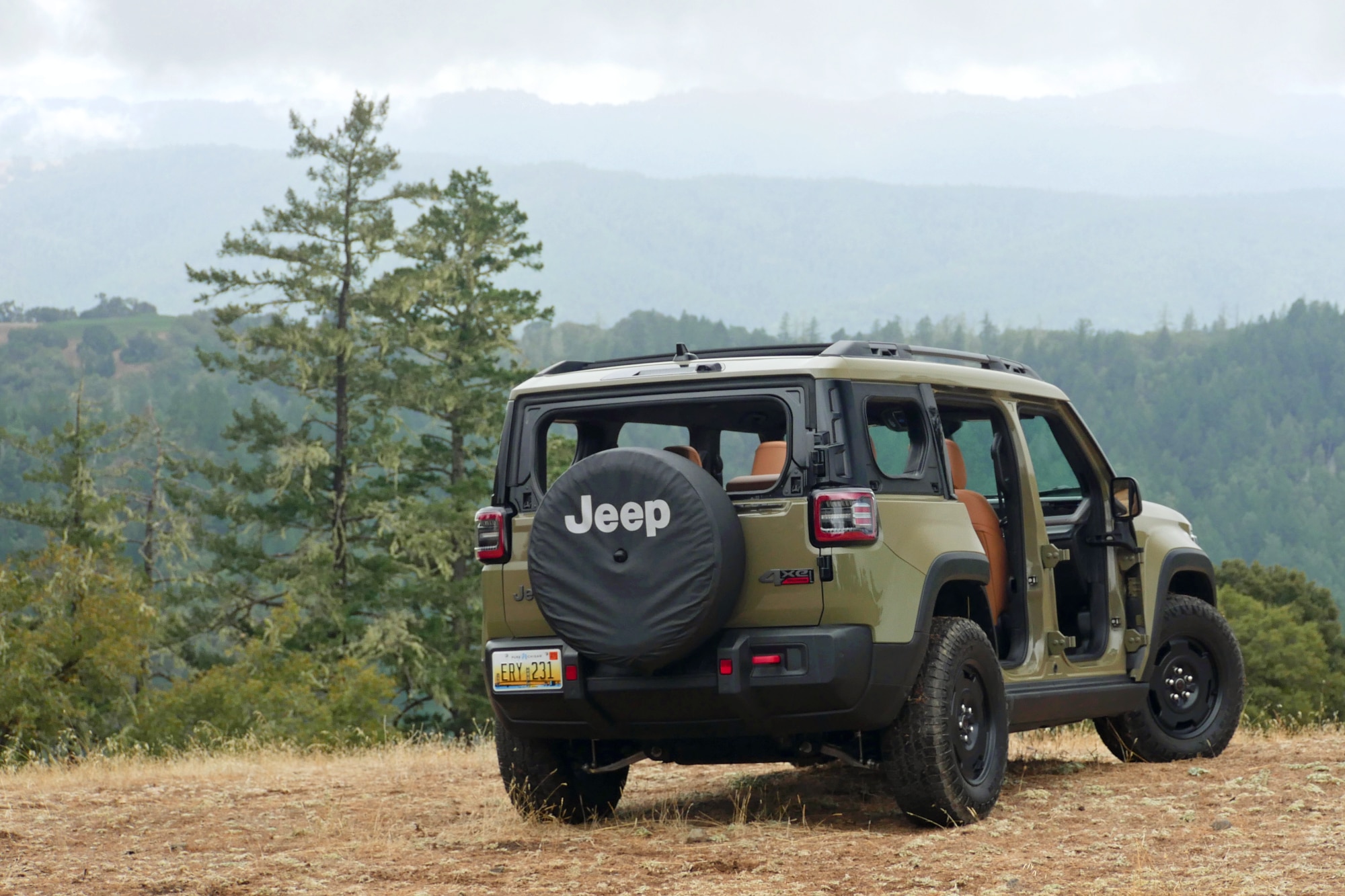
Eventually, the 2026 Jeep Recon will come in different trim levels, including the Overland, which I saw at the Recon's manufacturer-sponsored press event. It looked more roadgoing, with body-colored trim, bigger wheels, and all-season tires. For now, though, only the Moab trim level is available to start, priced at about $67,000, including the destination charge. It is built in Toluca, Mexico.
For this Recon review, I test-drove the Moab in Sonoma County, California. Optional equipment highlights included the Sky One-Touch Power Top, ventilated front seats and heated second-row seats, and Silver Zynith paint with a black contrast roof. The manufacturer's suggested retail price (MSRP) was $72,575, including the $1,995 destination charge. Jeep provided the vehicle for this Recon review and paid for airfare, lodging, and meals during the evaluation period.
Design, Quality, and Interior Layout
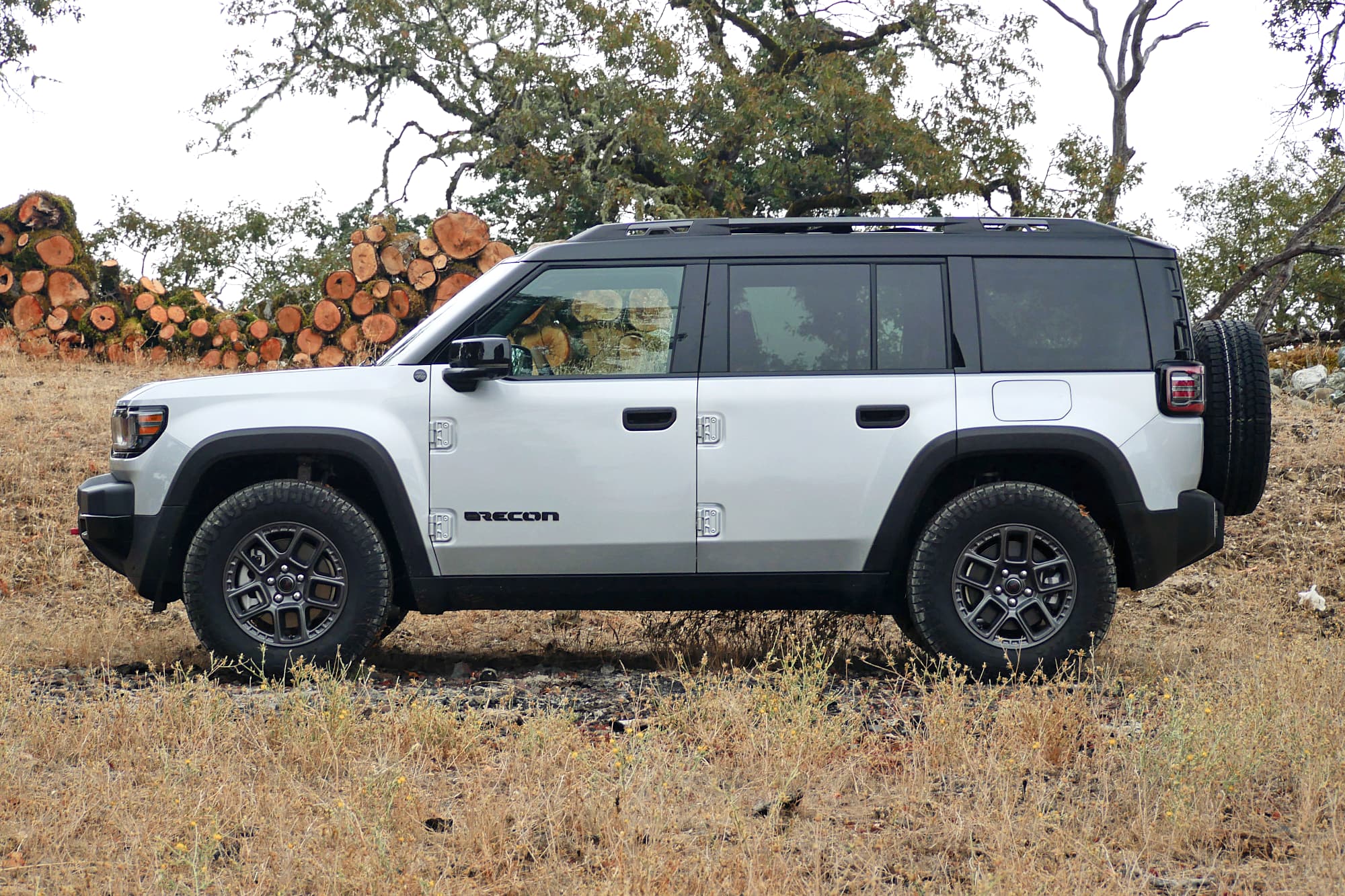
Style is, of course, subjective, but the Recon looks cool. It's unmistakably a Jeep and, to me at least, gives more Cherokee vibes than the actual Cherokee. There's also plenty of functionality in those looks — the short, chopped overhangs yield excellent approach (33.8 degrees) and departure (33.1 degrees) angles, the swing gate carries a full-size spare tire when many EVs don't have a spare at all, and the raised roof rails would be great for easily using the aftermarket crossbars and cargo box I own.
Oh, and then there are the doors, rear quarter windows, and back window, which all come off without tools (the windows use simple latches). As unusual and cool as that is, though, I don't imagine owners will take advantage of it much — how often do you see Wranglers driving around without doors?
As such, the optional Sky One-Touch retractable cloth sunroof is the more consequential feature. Opening it exposes almost the entire passenger cabin to the elements, and although the Wrangler offers a similar option for its hardtop, the Recon doesn't have a fat beam between the B pillars that breaks up all that sky.
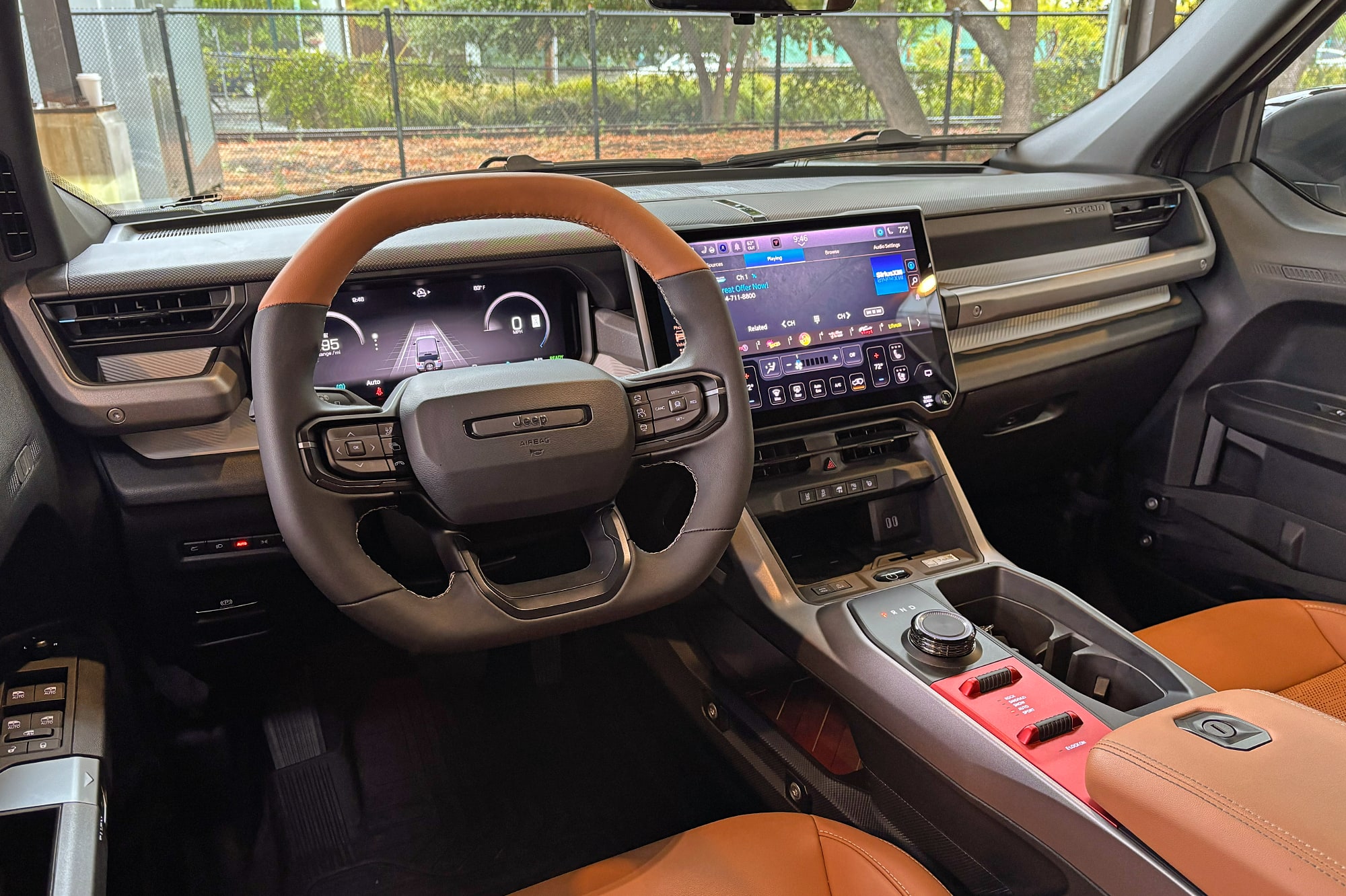
At first glance, the interior looks almost as luxurious as the Grand Cherokee's, but examine more closely, and you'll discover the doors, dashboard, and console are all composed of hard plastic. While that may create the perception of lower quality, you could argue that rubbery, low-sheen, soft-touch premium materials would be harder to clean, less durable when exposed to nature, and heavier in a vehicle that doesn't need an ounce of unnecessary weight.
Comfort, Convenience, and Cargo Space
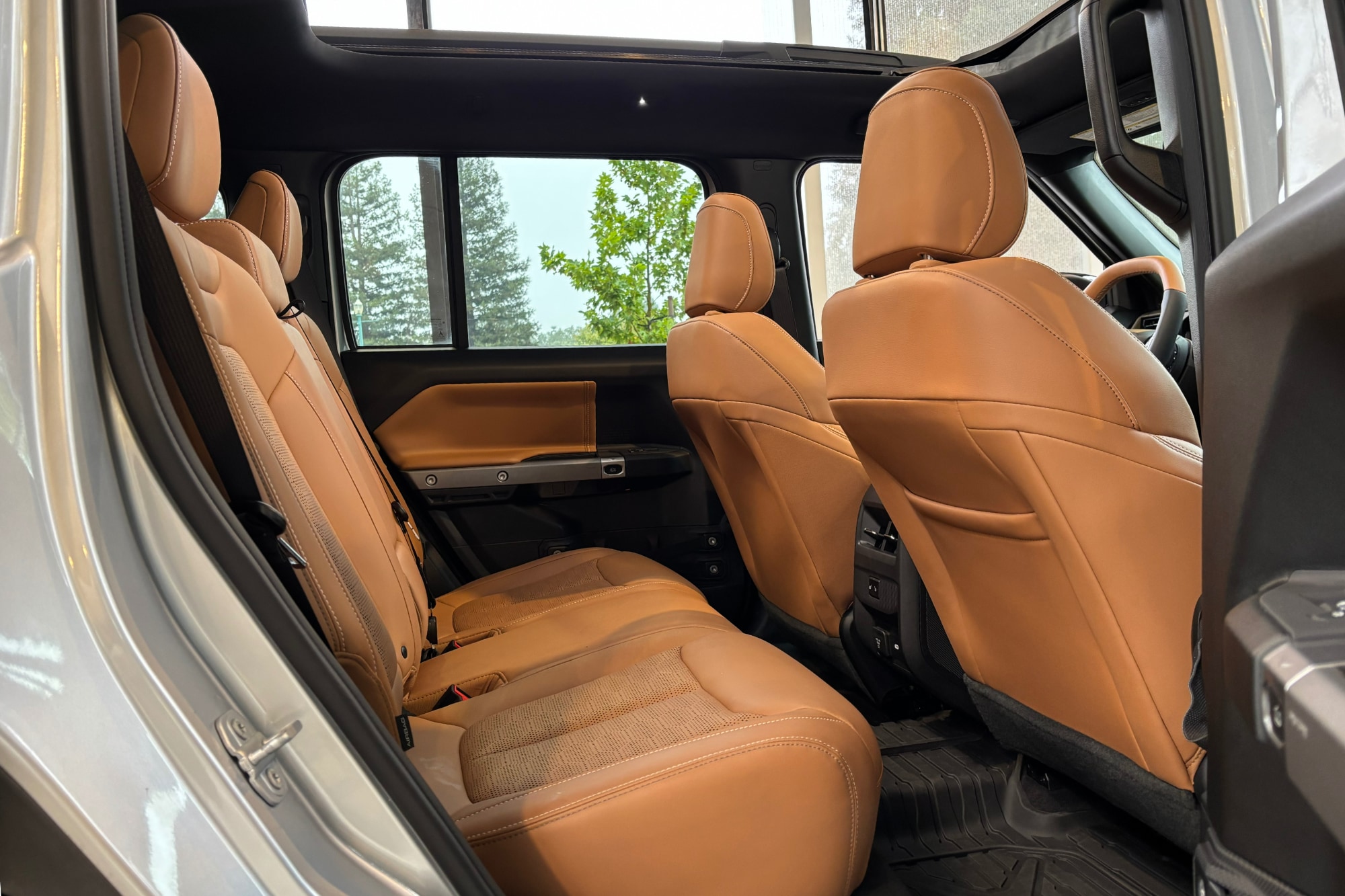
The comfortable driver's seat has substantially more fore-aft travel than the Wrangler, giving a more normal driving position, especially for a tall person like me.
With an average-size driver up front, I could fit comfortably in the back seat. At 6-foot-3, my knees would be touching my own driving position. The seat bottom is also at a nice height, thereby providing sufficient leg support. On paper, the Recon has virtually the same rear legroom as the Cherokee and Wrangler, but the Rivian R2 has 2 more inches.
Small-item storage is plentiful compared with the Wrangler, which has almost none, but otherwise it's just OK. The shifter and off-roading controls eat up a lot of center-console space, and the under-console area is a bit hard to access. The wireless charging pad is easy to reach, however, and didn't overheat my phone. The front cupholders seemed big, deep, and grippy enough for a large water bottle.
The Recon's interior also has a few distinctive elements. The center armrest bin has a lock because, you know, the doors come off. An accessory track lets you mount your phone or an action camera on top of the dash. The large door bins also feature criss-crossed elastic straps, which you can remove with hex bolts to make way for accessories.
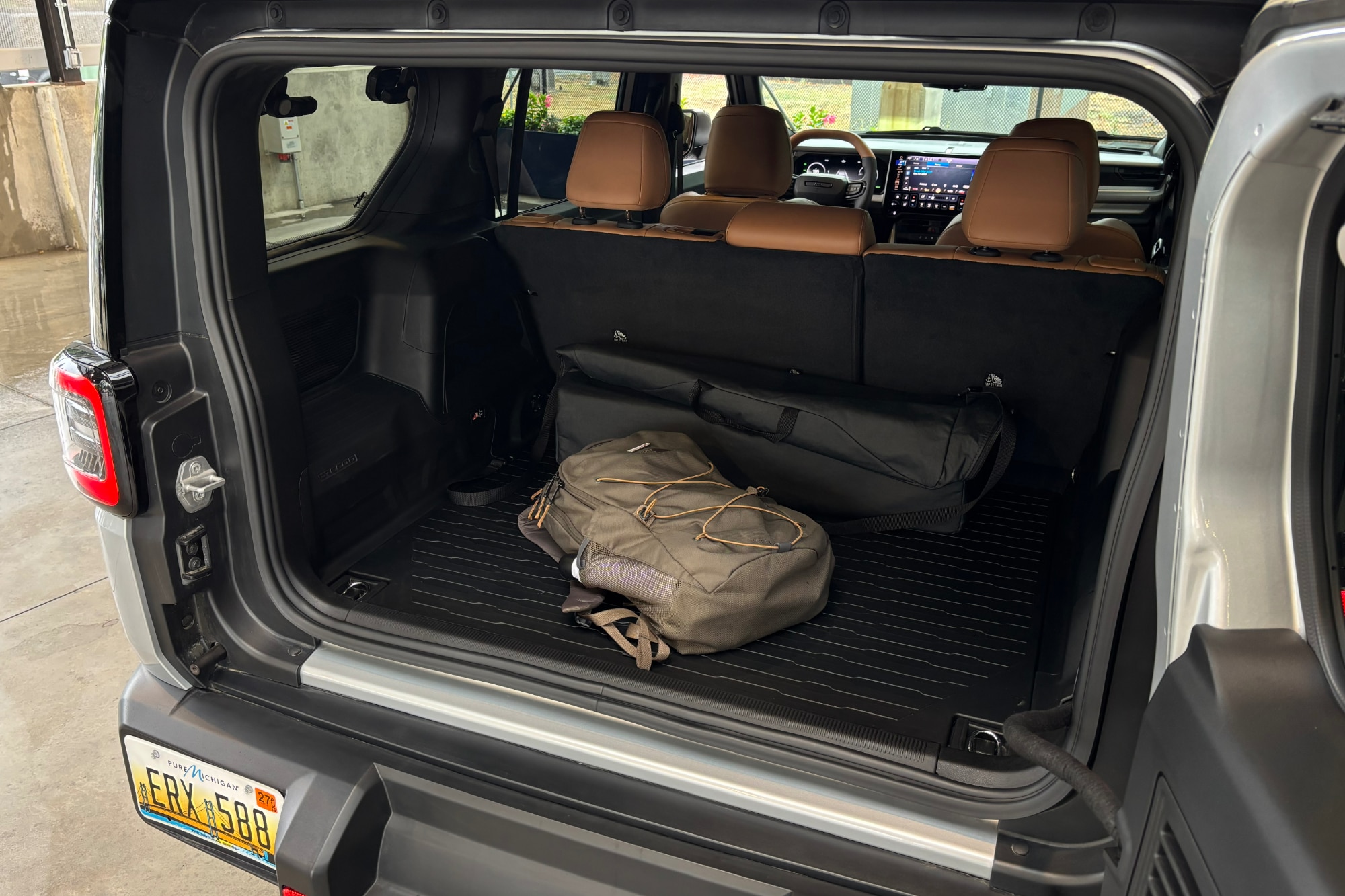
In terms of more traditional storage, there is 30.3 cubic-feet of cargo space behind the back seat. That would be on the small side for a compact crossover SUV — the Cherokee is a little bigger (33.6 cu-ft) — but measures almost the same as the Wrangler 4-Door (31.7 cu-ft) and Rivian R2 (33.9 cu-ft). Besides making for a hefty lift-up, the Recon's high floor also shrinks cargo height and, therefore, overall capacity.
The cargo area is accessed with a single-piece swing gate (versus the Wrangler's two-piece setup that requires opening the gate before lifting the window). You can remove the back window for longer items (surfboards, lumber), but you'll need to store it somewhere. Fold the back seats down, and the Recon can swallow 65.9 cu-ft of cargo.
2026 Jeep Recon Infotainment System Review
The Recon comes standard with the Uconnect 5 tech interface and a 14.4-inch touchscreen. It also includes a standard 12.0-inch digital instrumentation panel. Other features include:
- Integrated navigation with charging/route planning
- Wireless Apple CarPlay and Android Auto connectivity
- Alexa built-in
- Access to a 4G LTE Wi-Fi hot spot
- Voice controls
- SiriusXM satellite radio
- Wireless phone charger
- Four USB-C ports (two front, two rear)
- 115-volt power outlet (rear)
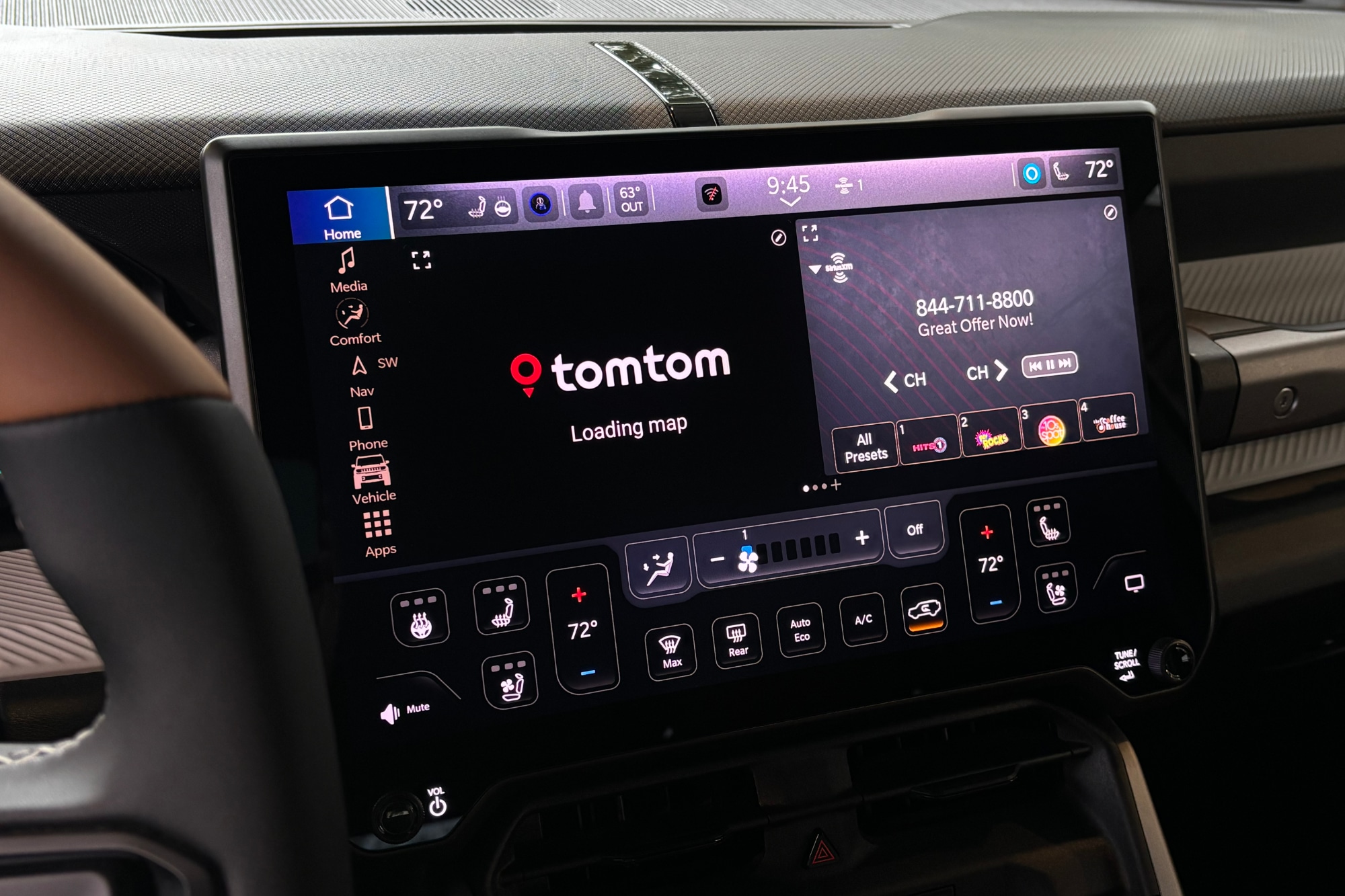
The Recon's touchscreen is the biggest ever fitted to a Jeep, but that's a bit deceptive because the lower third of the screen is devoted exclusively to the climate controls. While I'm never a fan of this approach, at least the buttons are large and always on the screen — as opposed to being squirreled away in a submenu.
The upper two-thirds is similar to what I recently tested in a Jeep Cherokee and Wrangler. The interface looks great; it responds well enough, and the layout makes sense. Overall, it's easy to use.
Unfortunately, I had issues with the navigation system. At one point, it did not make any audible alerts or announcements while route guidance was activated, despite everything indicating it should, and the time/distance to destination wouldn't change unless I went to a different menu. Turning the SUV off and on corrected both issues. The navigation map never showed up on the Home screen — just the TomTom logo and a message indicating the system was loading.
Safety Features and Ratings
Jeep equips the Recon with a large collection of advanced driver-assistance systems (ADAS) as standard equipment:
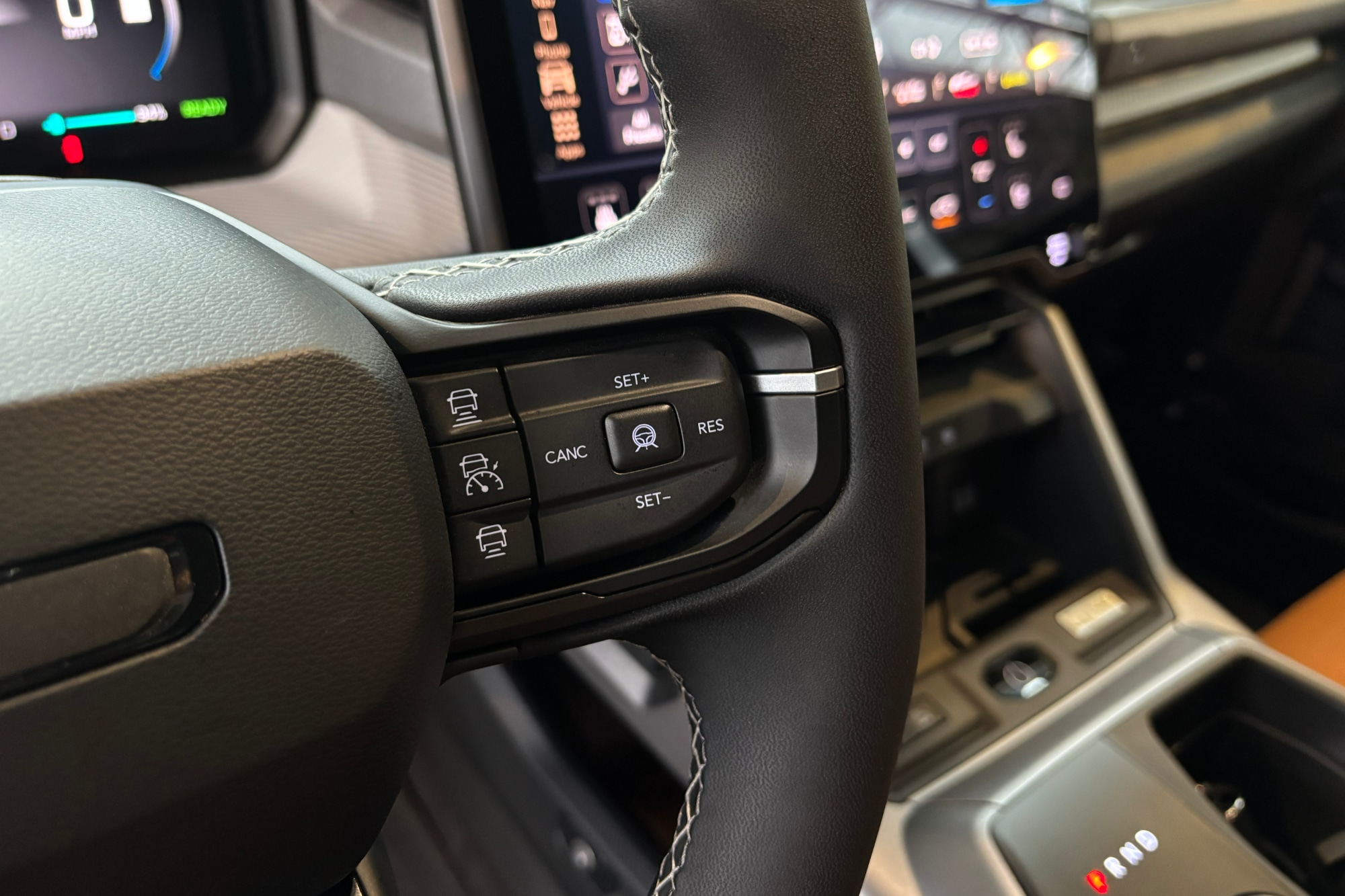
- Adaptive cruise control
- Automatic emergency braking
- Blind-spot monitoring
- Rear cross-traffic alert
- Rear automatic braking
- Lane-keeping assist
- Lane-centering assist
- Front and rear parking sensors
- Automated parking system
- 360-degree surround-view camera system
- Drowsy-driver detection
During my on-road test, these systems behaved normally. The lane-keeping system was a touch too quick to nudge and vibrate the wheel on tighter, winding country roads, but it did its job without annoyance on the highway. The adaptive cruise control also worked well, but the lane-centering steering assist was quick to call it quits around highway corners — I find most systems can handle all but the most extreme curves.
A hands-free highway-driving-assist system is unavailable on the Jeep Recon, though the Rivian R2 offers such a system as an option.
2026 Jeep Recon Specs and Driving Range
Every Recon comes with a pair of 250-kilowatt (kW) motors — one powering each axle — creating an all-wheel-drive system. Total output is a borderline absurd 670 horsepower and 620 pound-feet of torque. For reference, that's 385 more horses than the Wrangler's base V6 and 200 more than the Wrangler 392's 6.4-liter V8. On the other hand, it's in the same ballpark as the 656-hp Rivian R2 Performance.
Unfortunately for Jeep, and for anyone keen on the Recon, its electric range is not only in a different ballpark than the Rivian's; it's in a different state.
The Recon Moab has an EPA-estimated range of just 222 miles, and future trims are said by Jeep to get "up to 240 miles." This, despite a 100.5-kilowatt-hour (kWh) battery. For reference, the Rivian R2 Performance has a range of 307 miles with all-terrain tires, despite having an 87.9-kWh battery. In other words, the Jeep Recon seems awfully inefficient. Specifically, it has an EPA-estimated efficiency rating of 48 kWh/100 miles; the Rivian's is 34 kWh/100 miles; a Tesla Model Y Long Range AWD is 27 kWh/100 miles.
When I got into the Recon for my test, the instrument panel showed the battery at 92% and an estimated 192 miles of range. After 135 miles of mostly country road driving, the instrument panel showed 32 miles remaining and an in-car efficiency rating of 43.5 kWh/100 miles.
This range is uncompetitive and might be untenable for most EV buyers. I say that as someone who has owned two electric vehicles, one with only about 260 miles of range.
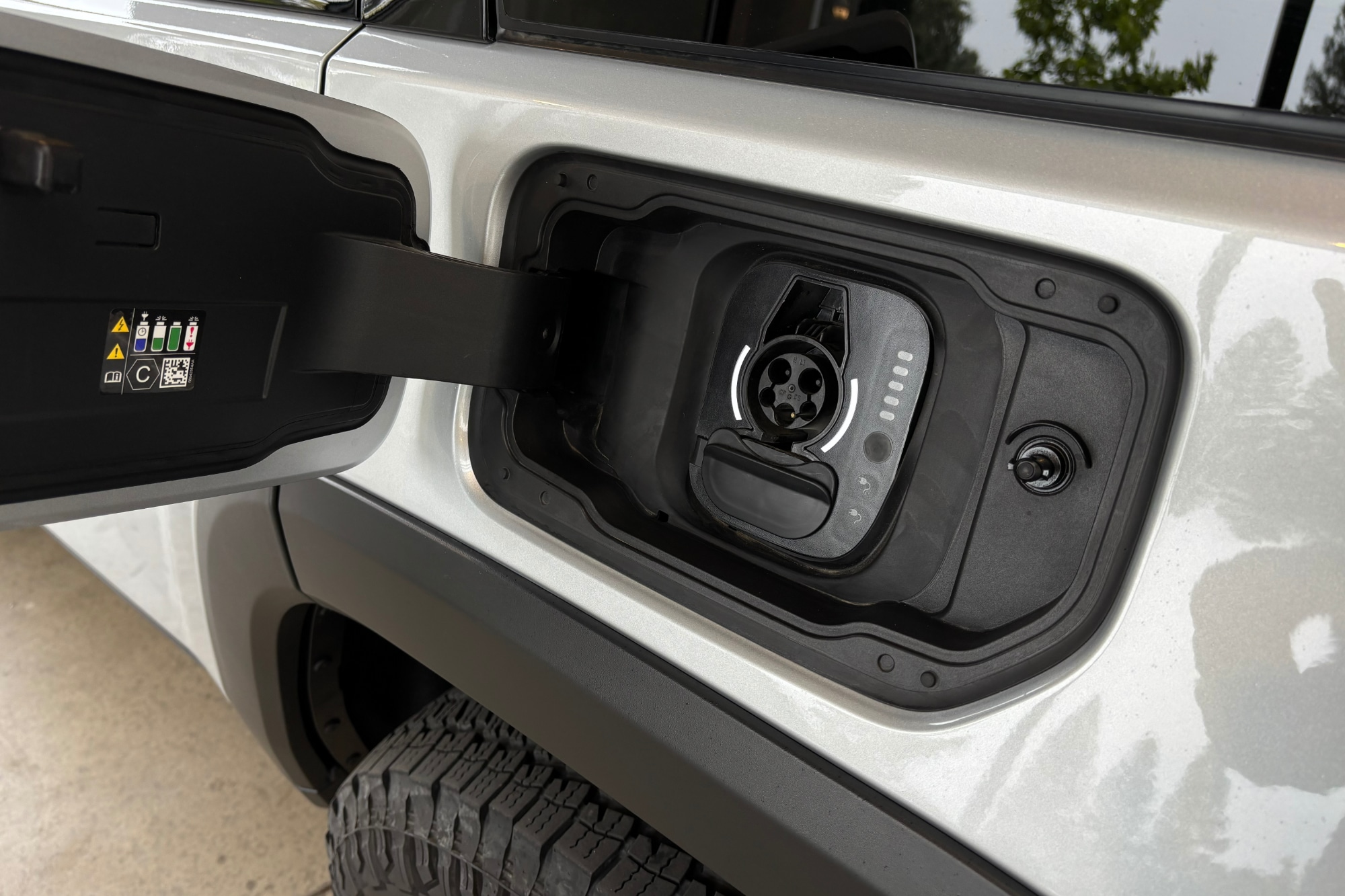
True, charging is getting a lot easier, especially as Tesla's Supercharger network is open to other brands, including Jeep — the Recon requires an adapter to use one, but that's not a big deal. Its charging speed is also OK — the specs indicate the battery will go from 5% to 80% in 28 minutes. The Rivian is estimated to go from 10% to 80% in about 30 minutes, for some context.
But then we come to the Recon's second big problem: price. It costs about $10,000 more than the Rivian R2 Performance, which is just one example of an electric SUV that provides far more range for the money.
Ah, but what about gas-powered SUVs? Well, off-roaders such as the Jeep Wrangler, Ford Bronco, and Toyota 4Runner are pretty expensive in their own right. Moreover, the Wrangler 392 starts at about $72,000, with the Moab 392 starting at about $82,000. They're also about a second slower from zero to 60 mph and chug gas at 14 mpg in combined city and highway driving. In other words, the Recon is pricey, but not by Jeep standards. The range is the problem here.
2026 Jeep Recon Test Drive
Acceleration in the Recon is giggle-inducing. I dare you to put your foot to the floor and not laugh. Actually, putting your foot all the way down isn't necessary — I passed vehicles on the highway with just a light foot tap. Meanwhile, it all happens in utterly smooth silence.
Plus, unlike the Wrangler 392 with its trucklike ladder frame and archaic solid-axle suspension, the Recon's extraordinary speed potential doesn't come with the sneaking suspicion that it's all kind of a bad idea. With its unibody platform and independent front and rear suspension, the Recon feels more sophisticated, responsive, and better able to handle its power. True, it can't match the Wrangler off-road, but more on that in a moment.
Besides its sheer thrust, the Recon was a delight to drive on-road as well. The all-terrain tires offered limited grip and, I suspect, dulled steering feedback, but lateral body motions were nicely controlled, and I could maintain a smooth, consistent pace on a winding road. The steering was responsive enough (a little more so in Sport mode), and the Recon never felt ponderous like a Wrangler, Ford Bronco, or Toyota 4Runner can.
I was also impressed with its ride comfort despite its all-terrain tires (usually the death knell for good ride quality). It also didn't have excessive road noise. More wind noise came through the Sky One-Touch cloth roof, but that's an option (a panoramic sunroof is standard), and it was still less than a Wrangler or Bronco with their hard tops.
For EV considerations, the Recon has two levels of regenerative braking. Minimum felt like a regular gas-powered car, while Maximum felt like a typical EV one-pedal driving mode. To get that, though, you have to turn the Recon's Creep Mode off. Unfortunately, I had to dig through touchscreen menus to select all of the above (I saw no paddle shifters, as I've used in other EVs), and worse, the Recon defaulted back to Minimum regen every time I restarted it. Grrrrr! Dear Jeep, change that immediately.
As for off-roading, the Recon may not have the clearances, solid axles, 35-inch tires, or disconnecting stabilizer bars of a Wrangler Moab 392, but that's quite the elevated comparison. Jeep still puts its Trail Rated badge on the Recon, for whatever that's worth. At the bare minimum, its ground clearance is competitive with a Toyota 4Runner TRD Off-Road and Rivian R2, and its approach and departure angles are superior.
I wasn't able to drive the Recon on an off-road excursion to rival its Moab name, but the challenges crafted at the Jeep-sponsored media event that tested its suspension articulation, rock-crawling, and water fording were substantially greater than anything I'd usually attempt at my home off-roading trail, and certainly by myself without professional spotters. Though I wish the throttle provided more feedback when negotiating extra-tough terrain, the Recon is a legitimate off-roading SUV.
It was especially fun on the winding, rock-strewn dirt road that led to the more challenging off-road bits. It was a blast to, well, blast the Recon around the various corners, feeling the all-terrains slip ever so slightly yet still cling tenaciously to the ground below. It felt surprisingly small and maneuverable.
Alternatives to the 2026 Jeep Recon
The Rivian R2 is the most obvious alternative to the Jeep Recon. It's not a quasi-convertible, but it matches the Recon's performance, costs less, and goes much farther on a charge. It's also available in lower-priced and less powerful versions. Other engaging EVs for similar money or less include the Ford Mustang Mach-E Rally and GMC Sierra EV. Also, in case you're wondering, Jeep has discontinued the Wrangler plug-in hybrid.
This site is for educational purposes only. The third parties listed are not affiliated with Capital One and are solely responsible for their opinions, products and services, and all trademarks listed are the property of their respective owners. Capital One does not provide, endorse or guarantee any third-party product, service, information or recommendation listed above. The information presented in this article is believed to be accurate at the time of publication, but is subject to change. The images shown are for illustration purposes only and may not be an exact representation of the product. The material provided on this site is not intended to provide legal, investment, or financial advice or to indicate the availability or suitability of any Capital One product or service to your unique circumstances. For specific advice about your unique circumstances, you may wish to consult a qualified professional.
Related articles
View more related articles