
2026 Ford Mustang
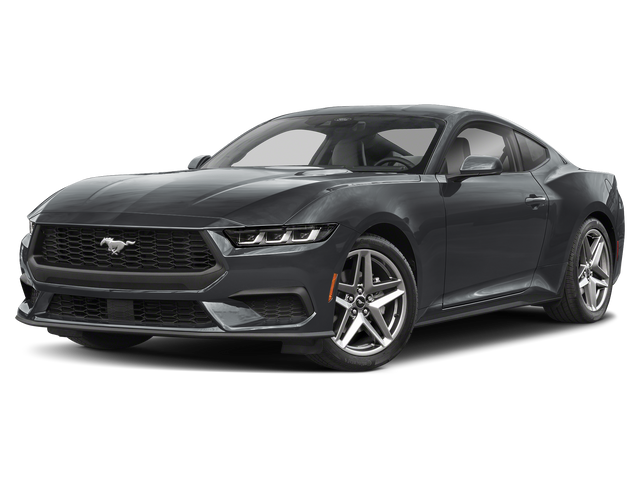
Starting at $34,315 MSRP
Our automotive expert shares opinions and new photos of the 2026 Mustang.
Tim Stevens
The 2026 Ford Mustang picks up a few desirable new packages that offer more attitude on the low end and, on the high end, some extreme performance, all without losing its daily drivability and practicality. The Mustang, now in its seventh generation, is still prancing after more than 60 years on the market, surviving where its classic competitor, the Chevrolet Camaro, has faltered.
While the 2026 Ford Mustang platform largely carries over, Ford is keeping things interesting by adding a new trim and packages designed to bring back older fans while also appealing to a younger generation.
The FX package is the most colorful new addition, intended to reference the visual flourishes of the Fox-body era of the 1990s. The 2026 model year also introduces the RTR package. Named for professional drifter Vaughn Gittin Jr.'s Ready to Rock label, the RTR Mustangs offer basic upgrades that add performance and style without radically changing the value equation.
Near the top end is the new Dark Horse SC trim level, which adds a supercharger and several go-fast bits to bridge the gap between the non-boosted Dark Horse and the outrageous Mustang GTD.
Tim Stevens
The 2026 Ford Mustang comes in seven core trims: EcoBoost, EcoBoost Premium, GT, GT Premium, Dark Horse, Dark Horse Premium, and the supercharged Dark Horse SC. Base prices range from about $35,000 to around $108,000, including the destination charge to ship the car from its Flat Rock, Michigan, assembly plant to a dealership. The range-topping, limited-production Mustang GTD supercar starts above $325,000.
For this Mustang review, I test-drove the EcoBoost Premium trim with the new RTR package. Optional equipment highlights included the Premium High Package, MagneRide suspension, Orange Fury Metallic paint, and painted brake calipers, bringing the manufacturer's suggested retail price (MSRP) to $54,040, including the $1,995 destination charge.
Ford provided the vehicle for this Mustang EcoBoost Premium RTR review and paid for airfare, lodging, and meals during the evaluation period.
Tim Stevens
While the 2026 Mustang doesn't have radical design changes, the new RTR trim does offer more visual flair than a typical EcoBoost-powered pony. It starts with the nose: the RTR borrows the front fascia from the V8-powered GT to make a stronger first impression.
From the side, badges on the front fenders and graphics sweeping up the rears accentuate the car's shape, while buyers can choose Hyper Lime-colored brake calipers to add even more curb appeal. It's hardly a reinvention, but it does add more flash to a now-familiar shape.
Sadly, there's even less new on the inside. The RTR features a small plaque on the right side of the dashboard, plus the option of a colored hand brake lever, but otherwise the interior is largely the same mixture of middling plastics in black and various shades of dark gray. From behind the wheel, I found it all too muted.
Tim Stevens
Regardless of design, the Mustang's interior is comfortable. The Recaro seats in my test vehicle were aggressively bolstered, so much so that larger drivers may struggle to fit. For me, at about 170 pounds, they were perfect, cushioned enough to be suitable on the highway but still offering generous lateral support for the sorts of roads you'd rather be spending your time on in a Mustang.
There's also plenty of headroom up front for a helmet and generous legroom for the driver and a passenger. In back, though, there's effectively zero legroom in the second row. I struggled to get back there just to take photos. It's better suited for dogs or backpacks than people.
At least there's a usable trunk. Pop the lid, and you'll find 13.3 cubic-feet of cargo space, plenty for a long getaway with someone special.
Tim Stevens
The 2026 Ford Mustang dashboard features a 13.2-inch touchscreen situated front and center. I appreciate that it's angled slightly toward the driver, making it easier to reach. That's paired with a 12.4-inch digital gauge cluster behind the steering wheel.
The middle display runs Ford's Sync 4, the car's primary interface, with controls for many common features, such as heating and cooling, available only by touch.
Standard features for the infotainment system include:
My car also added:
The RTR trim gets a new graphical flourish: an animated Mustang drifting across the display when you fire up the car. Otherwise, Ford's interface hasn't changed much since this Mustang generation debuted for 2024. It's as easy and intuitive to use as ever, and the navigation system is comprehensive.
That said, I found performance to be lacking in some areas. Panning around the map or switching between interface sections often resulted in noticeable lag, for example. It's simply not as snappy as it should be — but if you want something more responsive, you can always connect your phone and rely on Android Auto or Apple CarPlay.
The Sync voice assistant isn't as powerful as those available via smartphone projection. Still, it's reasonably capable, finding restaurants, hospitals, and other destinations quickly and without much fuss.
Tim Stevens
Ford equips the Mustang with Co-Pilot360, a collection of advanced driver-assistance systems (ADAS) as standard equipment including:
In addition to those features, my test car added Co-Pilot360 Assist+, which includes:
During my time in the test car Ford provided, I was unable to evaluate the advanced features within Co-Pilot360 Assist+. That said, I've sampled these features on other Mustangs and found them to work quite well, and I have no reason to expect that behavior won't continue on production versions of the 2026 Mustang.
The National Highway Traffic Safety Administration (NHTSA) gives the 2026 Ford Mustang the highest overall safety rating of five stars. At the time of publication, the Insurance Institute for Highway Safety (IIHS) had not posted safety scores for the 2026 Ford Mustang.
Tim Stevens
The 2026 Ford Mustang is available with a range of powertrains. At the low end is the 2.3-liter turbocharged EcoBoost four-cylinder engine, producing 315 horsepower and 350 pound-feet of torque. At the top end of the Mustang's core lineup is the 5.2-liter supercharged V8, available in the Dark Horse SC. It makes 795 horsepower and 660 lb-ft of torque.
The RTR I tested was on the low end of the spectrum, with the EcoBoost motor paired with a 10-speed automatic. It's rated by the EPA for 25 mpg in combined city and highway driving. That proved more or less accurate. In my mixed testing, I saw 25.1 mpg.
Tim Stevens
The RTR package's extras add considerable weight, which is unfortunate with the EcoBoost engine under the hood. Though the base EcoBoost Mustang weighs 3,573 pounds, the suspension, brakes, and other upgrades in the RTR package bring it up to 3,783 pounds. That's actually slightly more than a V8-powered Mustang GT.
Thankfully, it doesn't behave ponderously on the track. To give me a feel for the RTR, Ford chose California's tight and twisty Thunderhill West circuit. There, the lack of power wasn't an issue, either. The inline-four's strong torque tugged the RTR out of the tighter turns, and the machine's balance was immediately noticeable.
It was also a blast on the skidpad. I had the opportunity to see whether this entry-level performance machine could really live up to the type of driving promised by the association with Vaughn Gittin Jr. I was pleasantly surprised to find how willing the Mustang was to slide and smoke its tires, especially when I leaned on the hand brake lever mounted on the transmission tunnel.
With a tug of the hand brake, the RTR-equipped Mustang quickly spun about its axis. It didn't take me long to get the hang of it; I easily caught the drift and steered it sideways around a cone, leaving a giant cloud of white smoke in my wake. That EcoBoost engine may not be the most powerful, but it's more than enough to overwhelm the rear tires.
The RTR was at its best on the tight, twisty public roads I took to the circuit. I was lucky to sample some of Northern California's finest routes: narrow, winding, and a real challenge for the best sports cars. The Mustang did great, communicating clearly through the steering wheel and never failing to tell me how much grip was left long before I ran out.
It was perfectly pleasant on the highway, too, with only a bit of extra road noise spoiling the soup. The MagneRide suspension isn't the stiffest on one end or the most pliant on the other, but it blends handling and ride quality in a way that makes the Mustang an excellent everyday driver.
Tim Stevens
With the death of the Camaro, the Mustang more or less rules the roost when it comes to accessible, power-focused sports cars. The Dodge Charger also offers attainable muscle-car thrills, but with much more focus on straight-line speed. Those looking for nimbler options might want to check out the Nissan Z, or, if you're willing to spend a little more, Chevrolet's Corvette adds the extra appeal of a mid-engine layout.
What does a Mustang RTR cost?
The Mustang RTR package is available on the base EcoBoost and the EcoBoost Premium versions of the 2026 Mustang Fastback, and it costs $6,520. It requires an additional option package with the base trim, so the lowest price for a Mustang RTR is $43,705, including the destination charge. Prices may have changed since this article was published.
What does RTR mean on a Mustang?
It means "ready to rock." To create the new Mustang RTR, Ford collaborated with professional drifter Vaughn Gittin Jr.'s Ready to Rock Vehicles (RTR Vehicles), in a similar way to how it teamed up with Carroll Shelby and Shelby American in the past.
Does the Mustang RTR have a V8?
No. The Mustang RTR has Ford's turbocharged 2.3-liter EcoBoost four-cylinder engine.
How much horsepower does a Mustang RTR have?
The Ford Mustang RTR has 315 horsepower and 350 lb-ft of torque, delivered to the rear wheels through a 10-speed automatic transmission. A manual gearbox is not available with the EcoBoost engine.
Is the Mustang RTR street legal?
Yes. As equipped, manufactured, and delivered by Ford, a new Mustang RTR is street legal. If you're buying a used one, previous owner modifications may render the car non-compliant with local regulations.
This site is for educational purposes only. The third parties listed are not affiliated with Capital One and are solely responsible for their opinions, products and services, and all trademarks listed are the property of their respective owners. Capital One does not provide, endorse or guarantee any third-party product, service, information or recommendation listed above. The information presented in this article is believed to be accurate at the time of publication, but is subject to change. The images shown are for illustration purposes only and may not be an exact representation of the product. The material provided on this site is not intended to provide legal, investment, or financial advice or to indicate the availability or suitability of any Capital One product or service to your unique circumstances. For specific advice about your unique circumstances, you may wish to consult a qualified professional.
View more related articles