
2026 Ford F-150
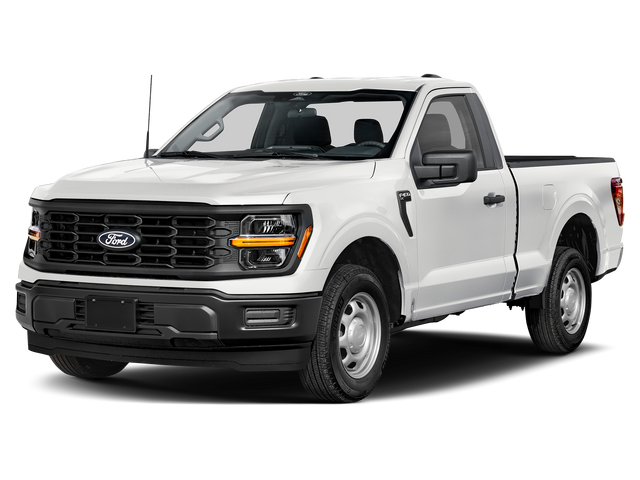
Starting at $40,085 MSRP
Our automotive expert shares opinions and new photos of the 2026 F-150.
 James Riswick
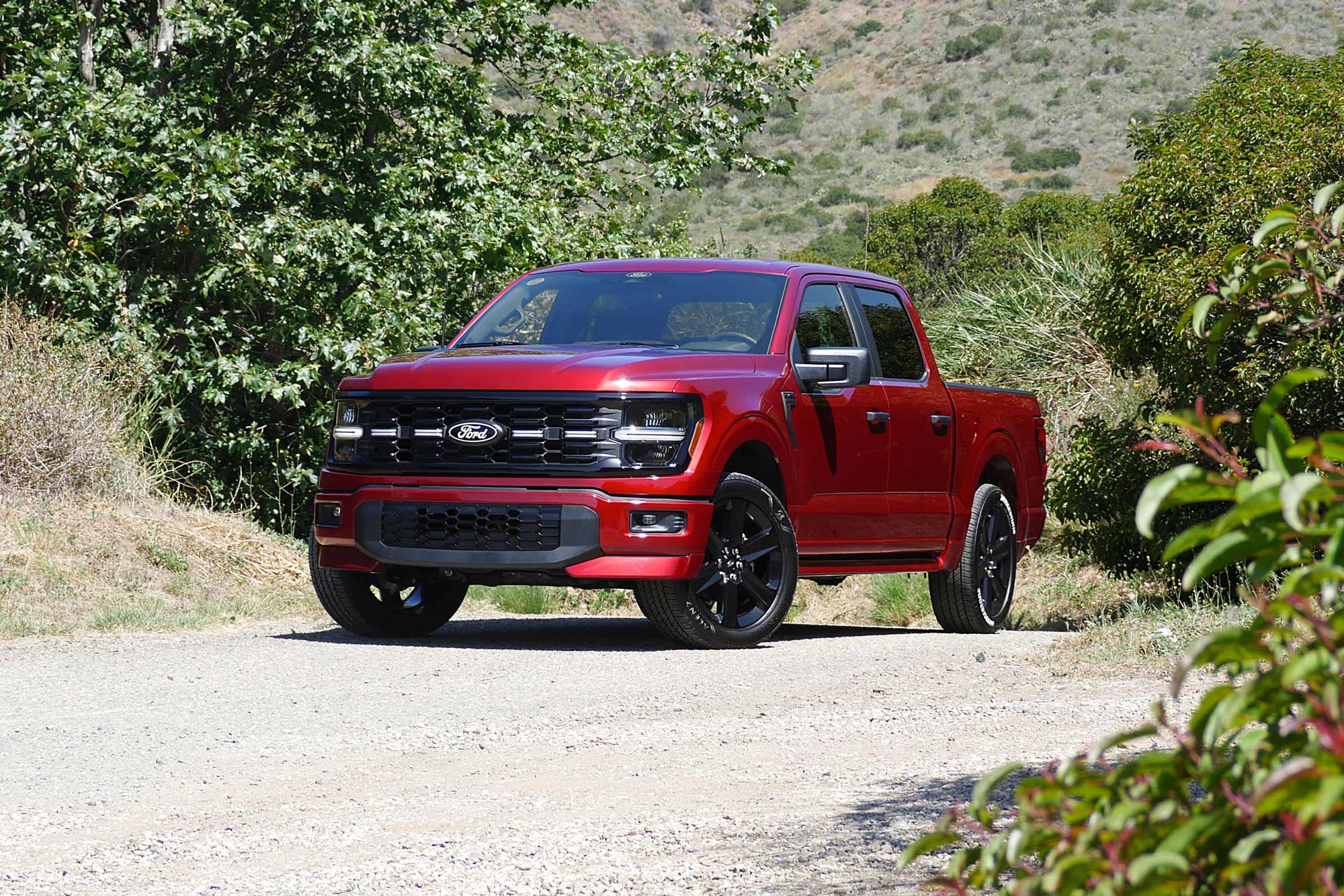
The 2026 Ford F-150 is available in so many configurations that writing a single, overarching review is almost futile. As such, I'm going to dig deeper into a few F-150 build possibilities with this review: the lightly equipped STX trim, the 5.0-liter V8 engine, and the special Lobo package. The F-150 Lobo is a unique variant to be sure, but it still sheds plenty of light on the lower end of the F-150's extensive and generally excellent lineup.
Ford made only minor updates for the 2026 F-150 lineup. The BlueCruise hands-free driving assistance system is now available as a one-time purchase (versus a subscription), and rear-wheel drive is now standard with Lariat, King Ranch, and Platinum trim. There are also new paint color choices.
 James Riswick
The 2026 Ford F-150 is available in regular, extended (Super Cab), and crew (SuperCrew) cab styles, three bed lengths, and eight trim levels: XL, STX, XLT, Lariat, King Ranch, Platinum, Tremor, and Raptor. There are also many engine choices and options; not every combination is possible. Base prices range from about $42,000 to around $82,000, including the destination charge.
For this F-150 review, I test-drove the STX trim level with the Lobo package. The latter costs $4,695, but it requires selecting other options, including the V8 engine, four-wheel drive, and the STX 200A equipment group, which effectively adds $12,620 to the sticker price. The test truck had a few other minor options, bringing the manufacturer's suggested retail price (MSRP) to $62,530, including the $2,795 destination charge. My F-150 test truck was built in Dearborn, Michigan. Ford provided the vehicle for this F-150 review.
 James Riswick
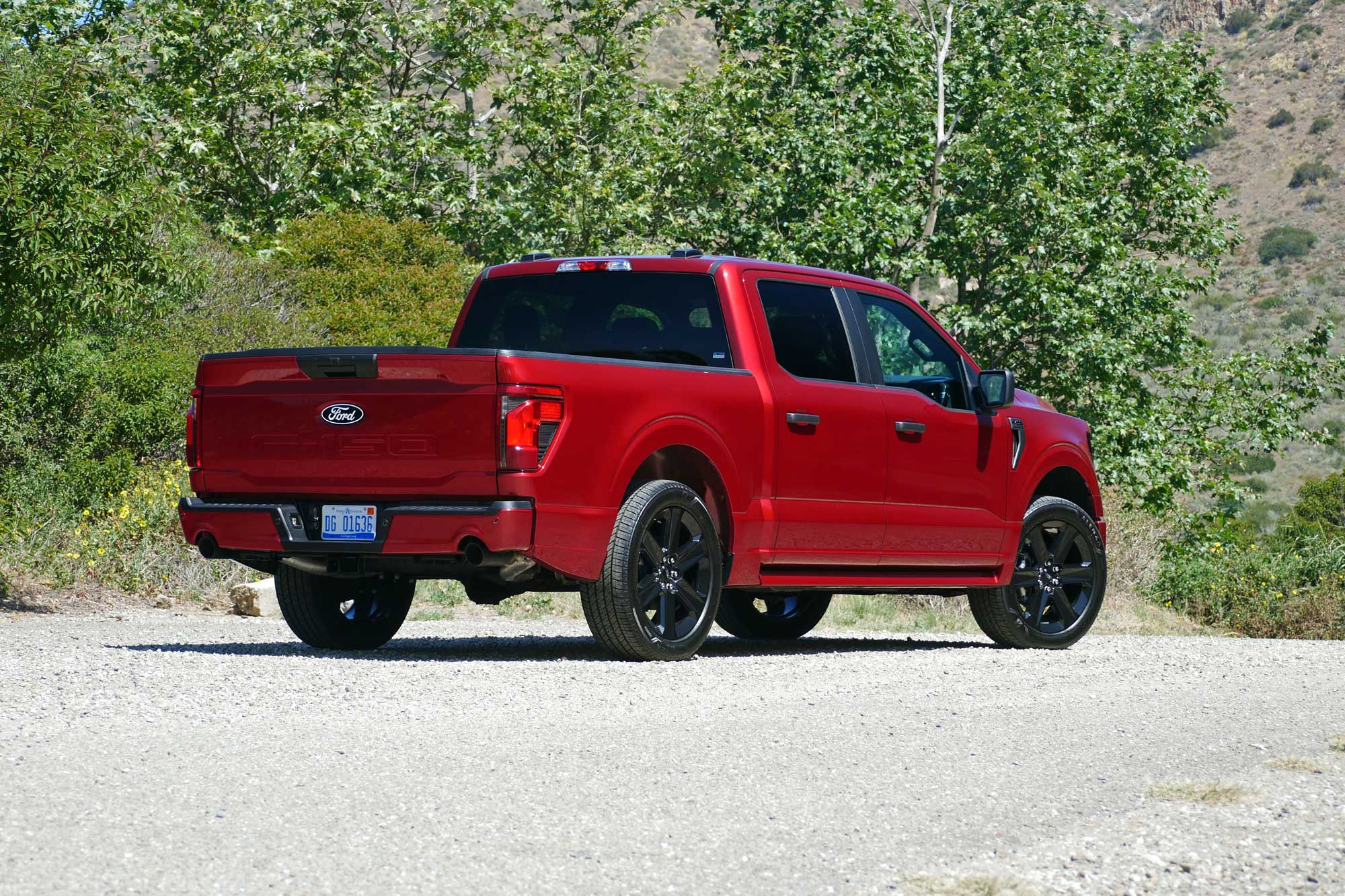
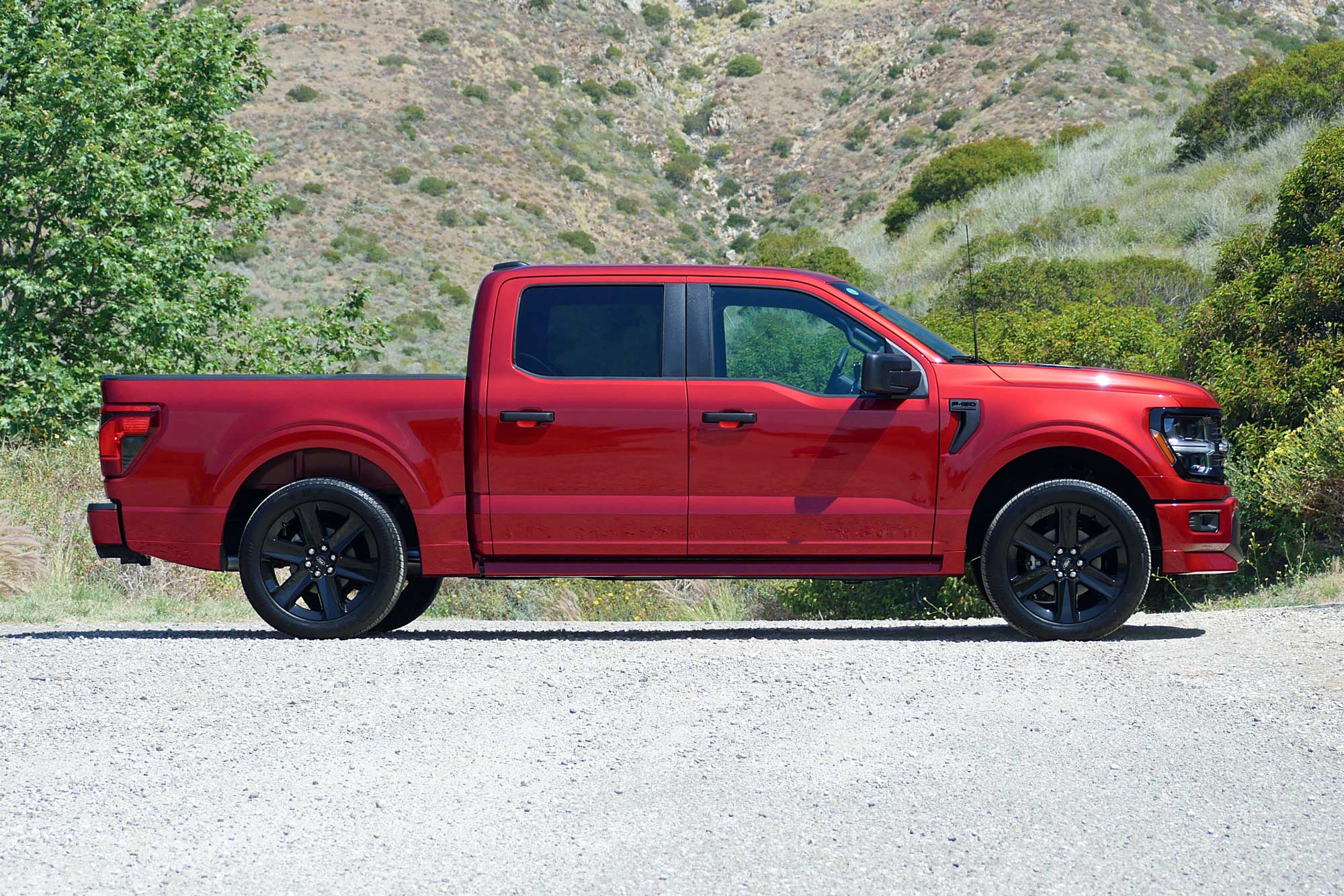
The go-to move for making your truck look cool is usually to lift it and add fat off-road tires. The F-150 offers versions like that, but the Lobo goes in the other direction. It's lowered (a full 2 inches at the rear) and features an appearance package that makes it look even lower. There are other distinctive visual elements: a front light bar, hood vents, mesh lower grille, dual exhaust outlets, and 22-inch wheels. It's a cool truck, especially in red.
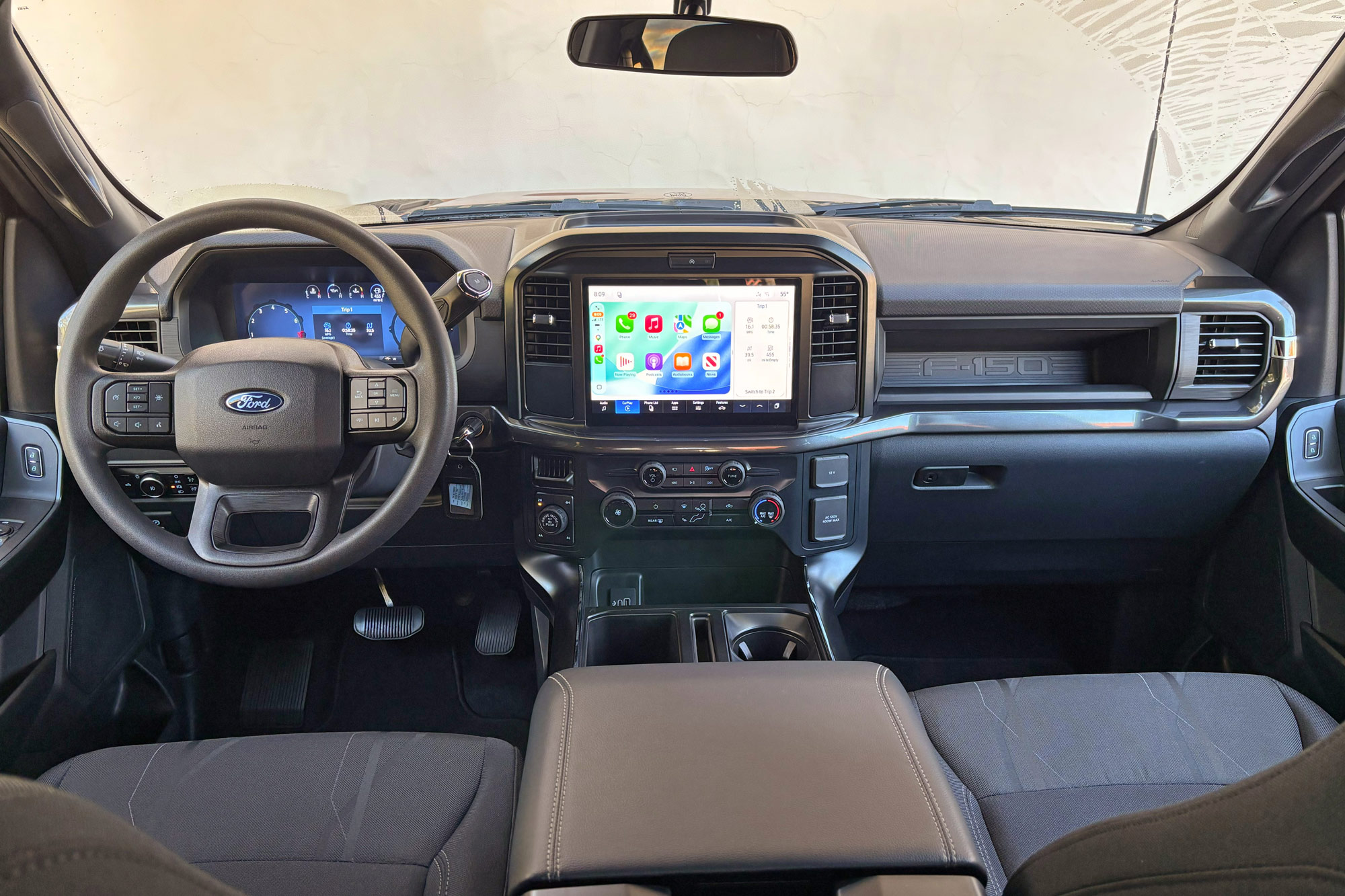
There is nothing special added inside, though. From here, my F-150 test truck was indicative of the STX trim level to which the Lobo package is added. It's very basic. Yet while the unwrapped steering wheel is lame, all the hard plastic is either well disguised or nicely textured, and the cloth upholstery looks and feels good. It's also worth noting that this basic F-150 interior is far better than what you'll find in a comparable low-trim Chevy or GMC.
The F-150's controls are refreshingly straightforward, with physical buttons and knobs maintained for the admittedly manual climate system. There are plenty of other sensible physical controls throughout, too.
Lower F-150 trim levels, such as the STX, lack the unusual electronic console shifter found on higher trim levels. Instead, they have a column shifter. It looks and functions in an old-school manner, yet operates with a lovely fluidity that's lacking with the clunky old column shifters of other trucks.
In general, I didn't mind the STX's comparatively stark cabin. As for the Lobo, though, you could get an F-150 XLT with the V8, four-wheel drive, and a black appearance package for about $3,000 less. With it, you'd get a nicer interior and more creature comforts. You'd do without the Lobo's styling elements, but it would look very similar. There are other ways to get close visually without paying as much, too. In other words, the Lobo's value is questionable.
 James Riswick
The F-150 STX has a manual driver's seat without height adjustment. At 6-foot-3, this didn't affect me, but my short wife would struggle to drive this truck, especially as it also lacked adjustable pedals. Even a base Ford Ranger has a height-adjustable driver's seat.
While a six-occupant F-150 SuperCrew cabin is available with a front middle seat, the STX comes standard with front buckets and a full center console. My test truck also had the Mobile Office Package, which provides a center armrest that flips forward and over to create a long, flat workspace or lunch tray.
Remember that "unusual electronic console shifter" I mentioned earlier? Well, it's unusual because it motors down into a recess to make way for the flip-over armrest/tray. It's nifty, but needlessly complicated. The STX's slick column shifter serves the same purpose but leaves that recess permanently open as a deep, handy bin for your stuff. It's better.
There's other good storage on the center console, too, including big, useful cupholders, a skinny bin that seems made for pens, and a deep phone bin that, in the STX, lacks wireless charging, but the Mobile Office Package adds it in upper trims. There's also a cubby in front of the passenger — it's missing the door included with higher trims, but it still has a rubber bottom to prevent things from sliding around.
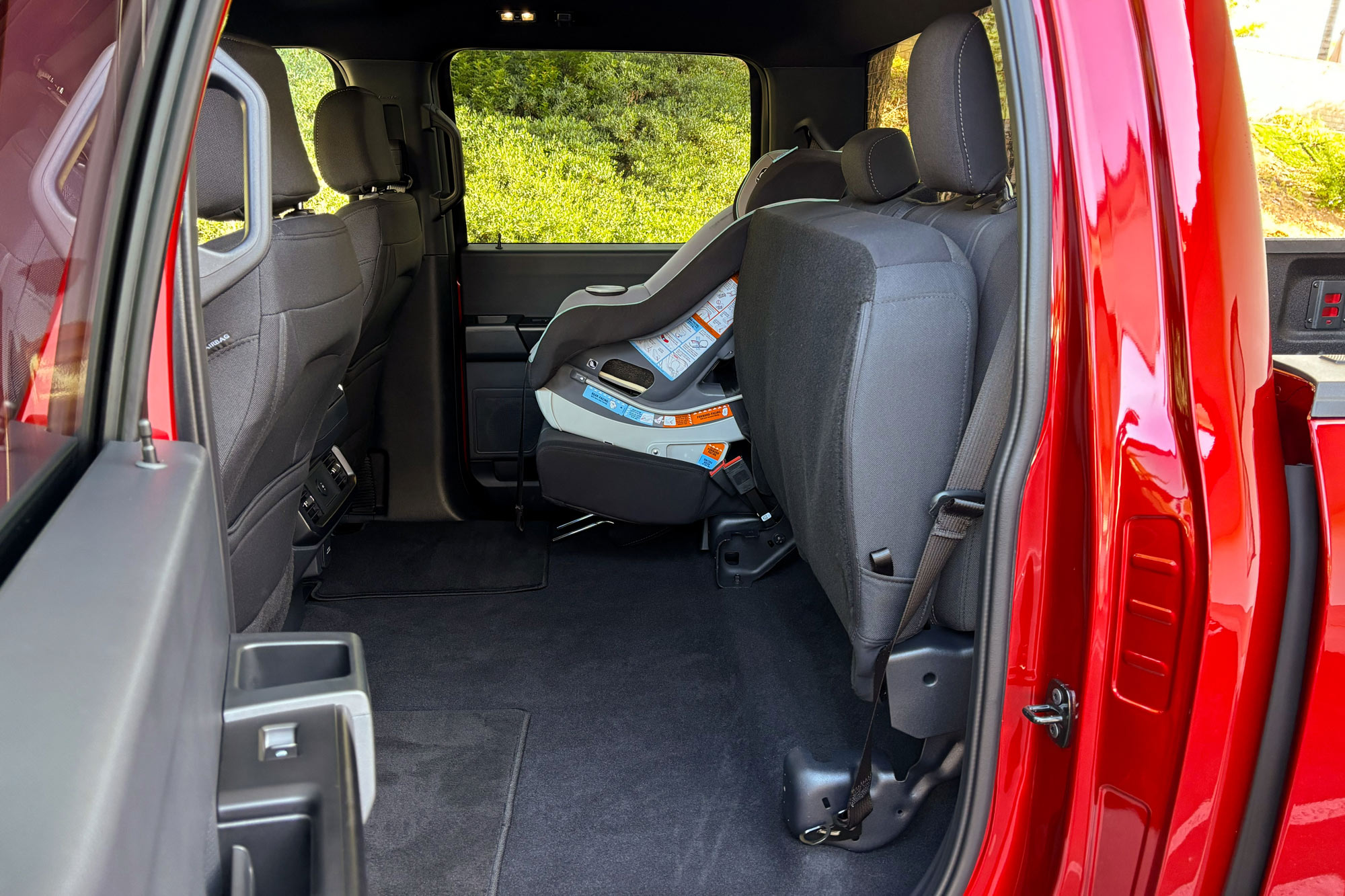
Common for full-size trucks, the interior space for people is immense. There's also abundant room for a forward- or rear-facing car seat. That said, I strongly recommend reading the owner's manual when securing a child seat, as the unusual series of rear LATCH anchor straps is unintuitive and inspires little confidence even when used properly. Other trucks have a similar setup, but the F-150's is the worst I've come across.
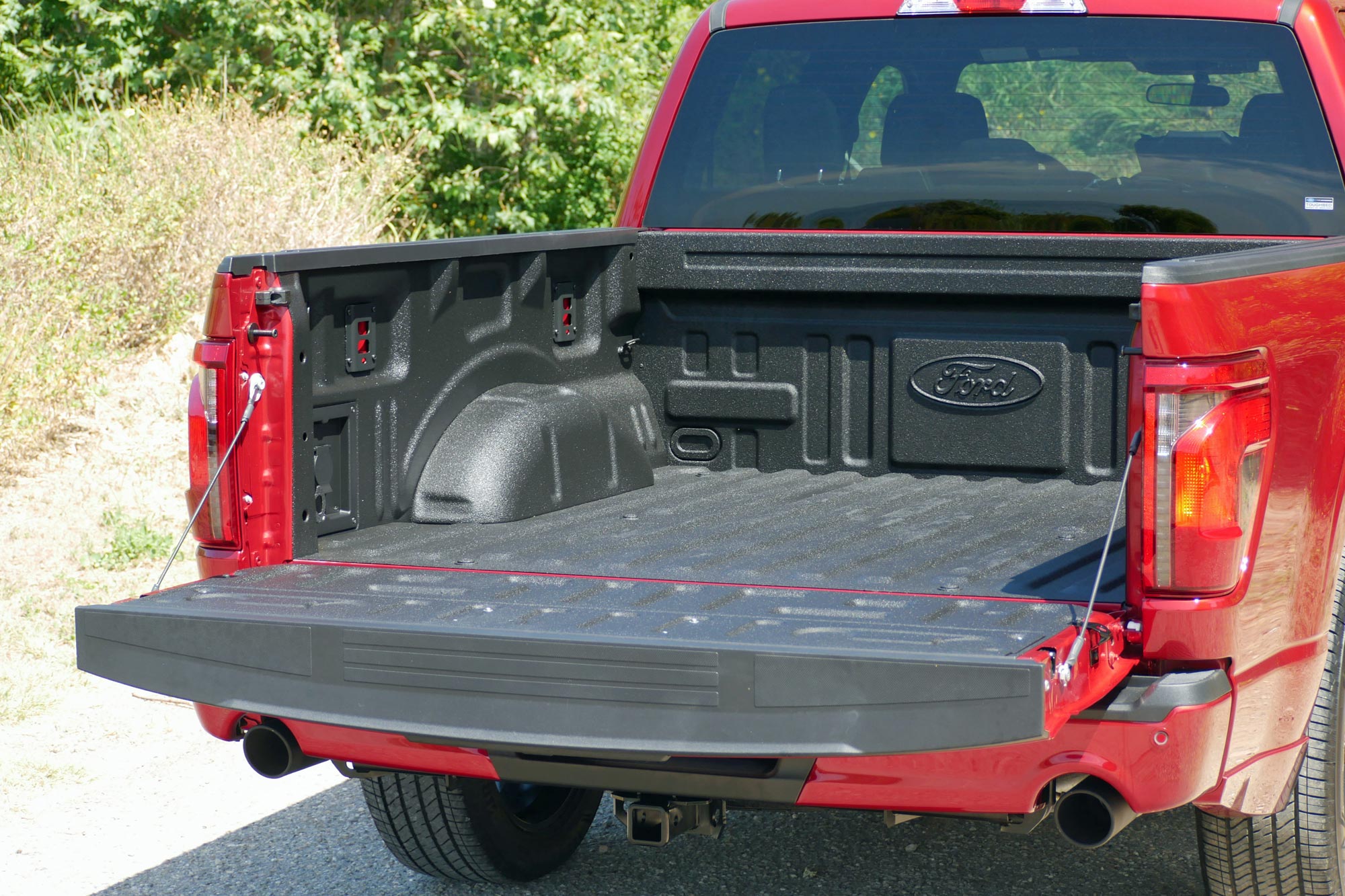
The bed lacked a fancy tailgate or assist step, though my truck did come with an optional Tough Bed spray-in liner. The maximum payload with this configuration is 1,980 pounds, and the F-150 can be configured to haul up to 2,440 pounds.
 James Riswick
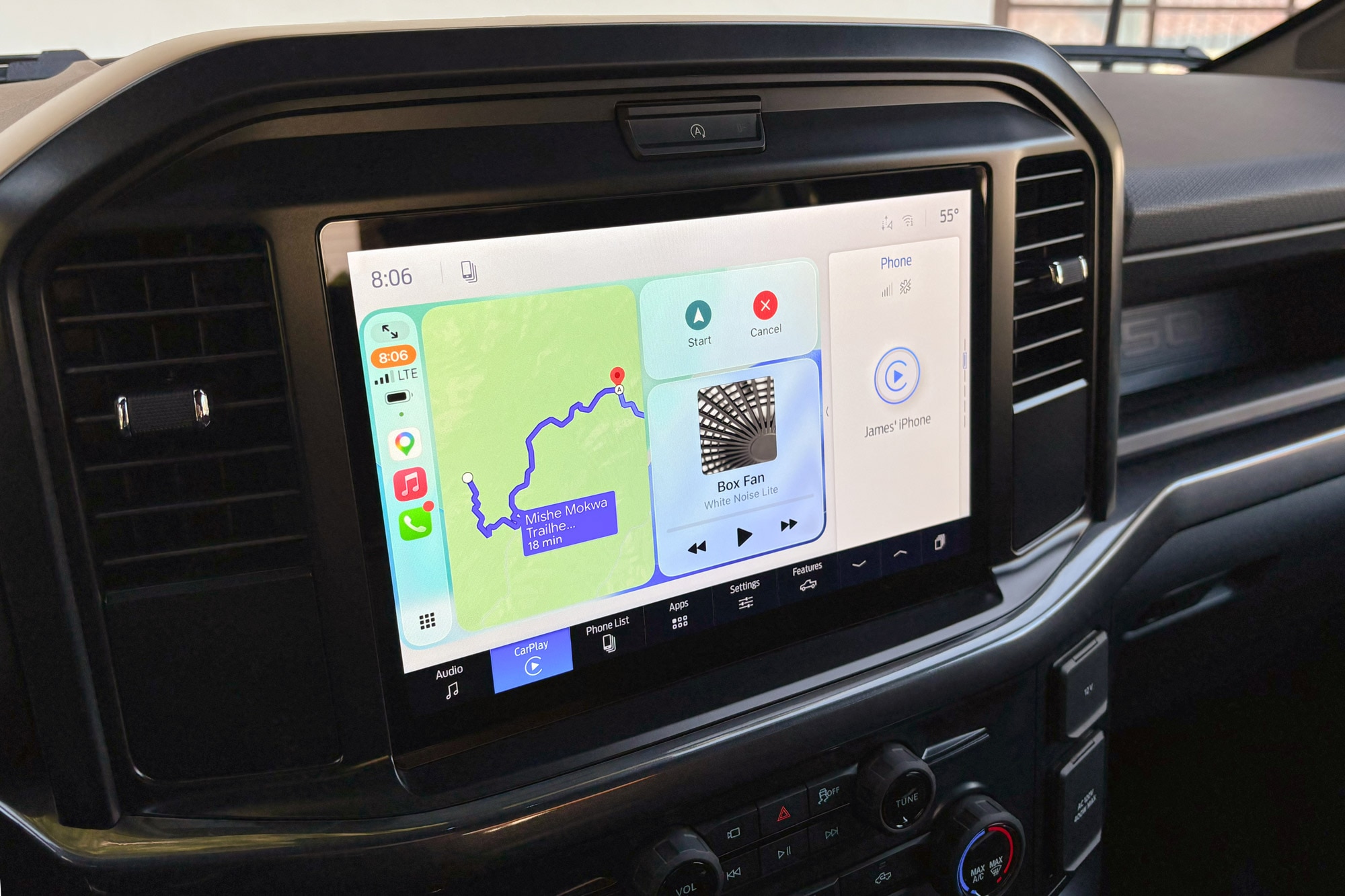
Even the base F-150 XL has the 12.0-inch touchscreen shown here with the following features:
The STX's optional 200A equipment group adds a configurable, legible, and easy-to-use 12.0-inch digital instrumentation panel that comes standard on the XLT trim and above. Besides that and an upgraded audio system, you're not actually missing any infotainment tech by sticking with a low trim level.
The situation is made even better thanks to this infotainment system being so darn good. It's easy to read, the radio controls aren't obtuse, it works well with wireless Apple CarPlay, and it features split-screen capability so you can see the navigation map and audio information at the same time. Ram's tech offerings are quite good, as are GM's on anything other than the lowest trim levels, but overall, I prefer Ford's system.
 James Riswick
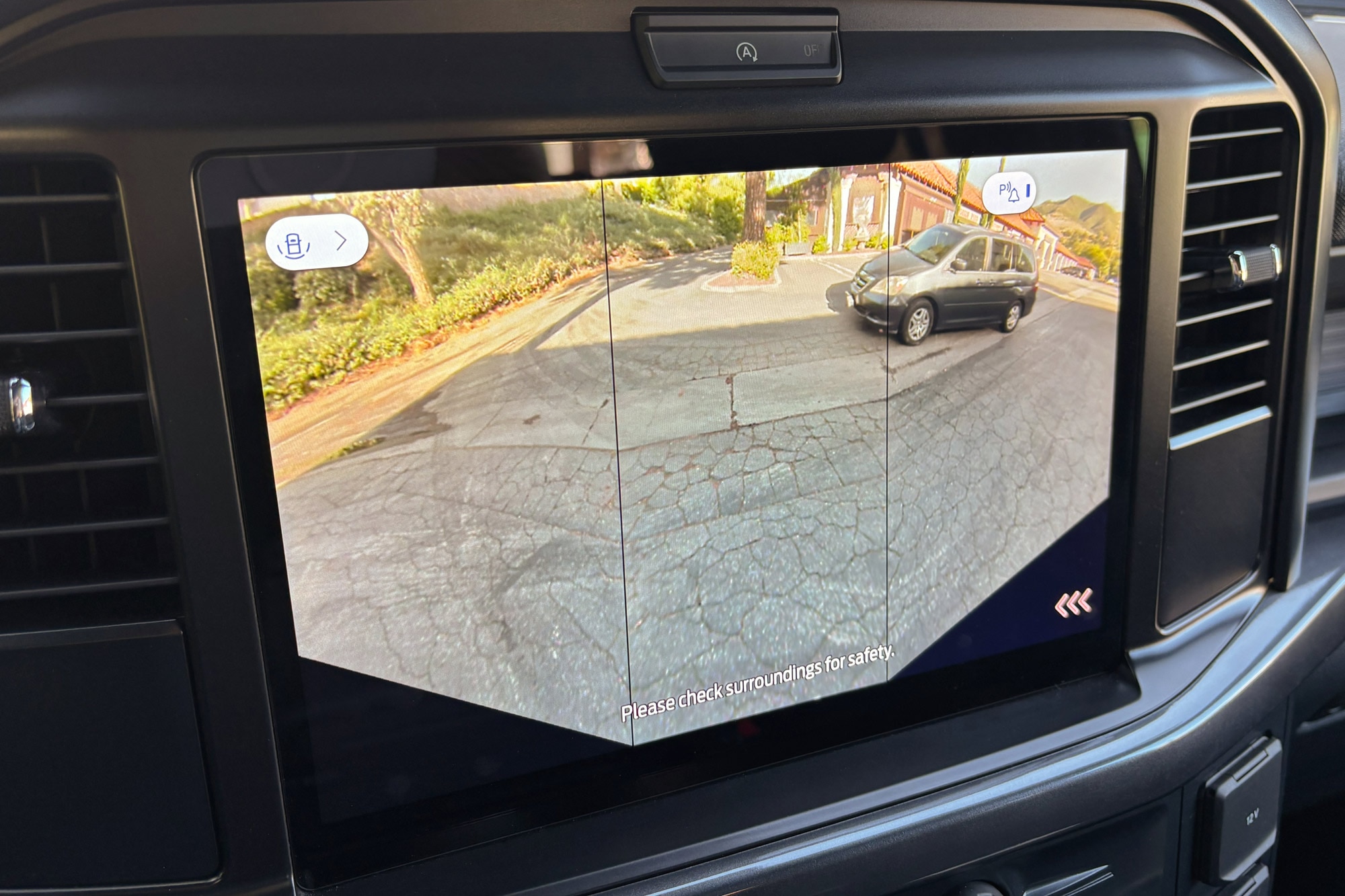
Ford equips every F-150 with the Ford Co-Pilot360 2.0 collection of advanced driver-assistance systems (ADAS) as standard equipment. It includes:
Starting with the XLT and therefore not included in my test vehicle, the F-150 can be equipped with:
These systems are excellent. I particularly like the level of customization they offer, giving the driver the option to choose how quickly a system will intervene and how it'll intervene. For example, setting lane-keeping to "alert only" will simply buzz the wheel and take no steering action.
Such customization is a great way to ensure these systems provide a genuinely helpful safety net without being so annoying that drivers turn them off, rendering that safety net moot.
According to the National Highway Traffic Safety Administration (NHTSA), the 2026 Ford F-150 crew cab earns a five-star overall safety rating and individual five-star ratings in all crash tests. The truck's rollover resistance rating is one notch down, at four stars.
Results from the Insurance Institute for Highway Safety (IIHS) are not as impressive. As reflected by my comments about how hard the LATCH anchor straps are to use, the F-150 crew cab receives a "Marginal" rating for its LATCH anchors. However, it also earns two "Poor" ratings. One concerns the effectiveness of the front-crash-prevention tech, and the other measures rear-passenger safety in moderate-overlap frontal-impact collisions involving the truck.
 James Riswick
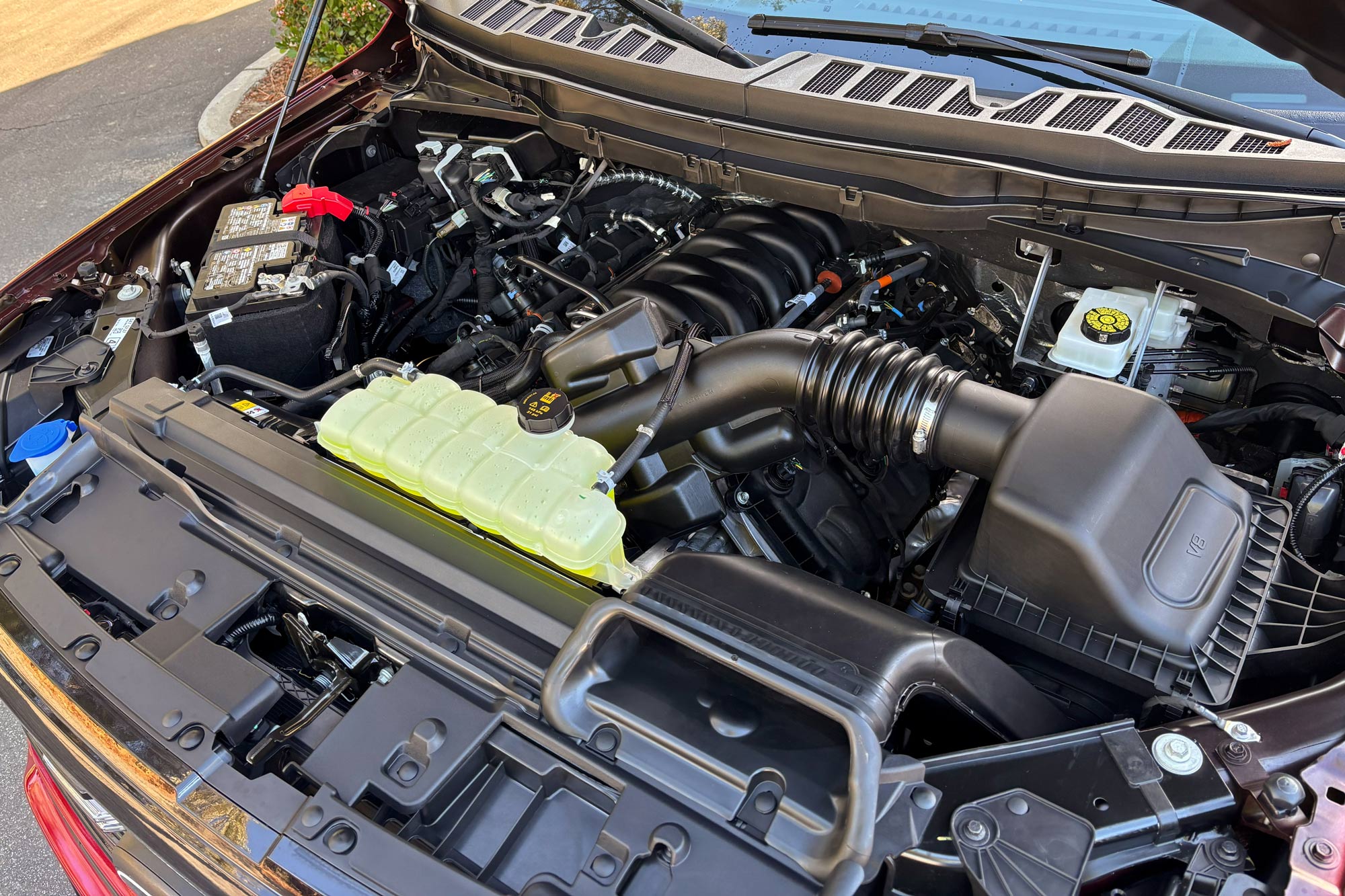
Among the F-150's six engine options, the Lobo package requires the 5.0-liter V8; it's also the only way to pair the STX with the 5.0. It produces 400 horsepower and 410 pound-feet of torque, and is paired with a 10-speed automatic transmission. As configured, my test truck's maximum tow rating is 10,200 pounds. The F-150 can be configured for a maximum towing capacity of 13,500 pounds.
The EPA-estimated fuel economy rating for the F-150 STX Lobo is 19 mpg in combined city and highway driving. My evaluation drive produced an average of 17.1 mpg. It kept falling thereafter, and after a week and 80 more miles of suburban driving, I finished at 15.3 mpg.
I'm not sure how the other gas-only engines would've fared in the real world, but their EPA estimates are similar. It's performance that makes the ultimate difference.
The F-150 comes standard with a 2.7-liter twin-turbocharged V6 (325 hp, 400 lb-ft, 20-21 mpg combined) and also offers a 3.5-liter twin-turbo V6 (400 hp, 500 lb-ft, 18-20 mpg combined) and a hybrid twin-turbo V6 (430 hp, 570 lb-ft, 23 mpg combined). The off-road performance model, the Raptor, offers a high-output version of the 3.5-liter V6 (450 hp, 510 lb-ft, 16 mpg combined) and a supercharged 5.2-liter V8 (720 hp, 640 lb-ft, 12 mpg combined).
 James Riswick
I'm a big fan of the F-150's twin-turbocharged V6 engines, especially the 3.5-liter. They're smooth, quiet, and torque-rich. And while the 3.5 matches the V8's fuel economy (on paper at least), it's more powerful and has way more torque. That said, I can definitely understand the appeal of the 5.0-liter V8. Quite simply, it sounds cool. I could feel that its torque punch arrives later than with the 3.5, but there are fewer drawbacks with this V8 than Ram's or GM's.
As for the rest of the driving experience, I was genuinely shocked at how good the Lobo's ride was despite the lowered suspension and 22-inch wheels. Logically, it should be the F-150's worst-case ride-quality scenario. There is some telltale truck wiggle over really big bumps, but nothing like the full Shakira that a Chevy Silverado RST consistently showcased with a regular-height suspension and smaller wheels. Even the amount of head bob on choppy concrete highway surfaces was tolerable.
Now, it did seem like the Lobo's lower suspension reduced body roll around corners, but this street truck otherwise feels as sporty as, well, a gigantic full-size truck. I didn't find it easier or more enjoyable to drive than other F-150s. Kudos to the steering, though, which impressed me with its precision and reassuring amount of effort. It provides a lot of confidence, which is good when driving something this size.
 James Riswick
I'm not sure the Lobo makes that much sense from a value perspective, but I certainly liked it. Furthermore, if you want a lowered street truck, it's the Lobo, the nutty 777-hp Ram Rumble Bee, or a DIY build.
As for the F-150 STX, its cabin quality, functionality, and tech are impressive — especially when compared with a low-trim-level Silverado or GMC Sierra. The V8 also impressed me, and while I'd probably choose one of the turbo V6s, the Blue Oval's eight-cylinder does have efficiency and power advantages over GM's 5.3-liter V8 and Ram's resurrected 5.7-liter V8.
This site is for educational purposes only. The third parties listed are not affiliated with Capital One and are solely responsible for their opinions, products and services, and all trademarks listed are the property of their respective owners. Capital One does not provide, endorse or guarantee any third-party product, service, information or recommendation listed above. The information presented in this article is believed to be accurate at the time of publication, but is subject to change. The images shown are for illustration purposes only and may not be an exact representation of the product. The material provided on this site is not intended to provide legal, investment, or financial advice or to indicate the availability or suitability of any Capital One product or service to your unique circumstances. For specific advice about your unique circumstances, you may wish to consult a qualified professional.
View more related articles